Aventurine: a green quartz with a built-in shimmer
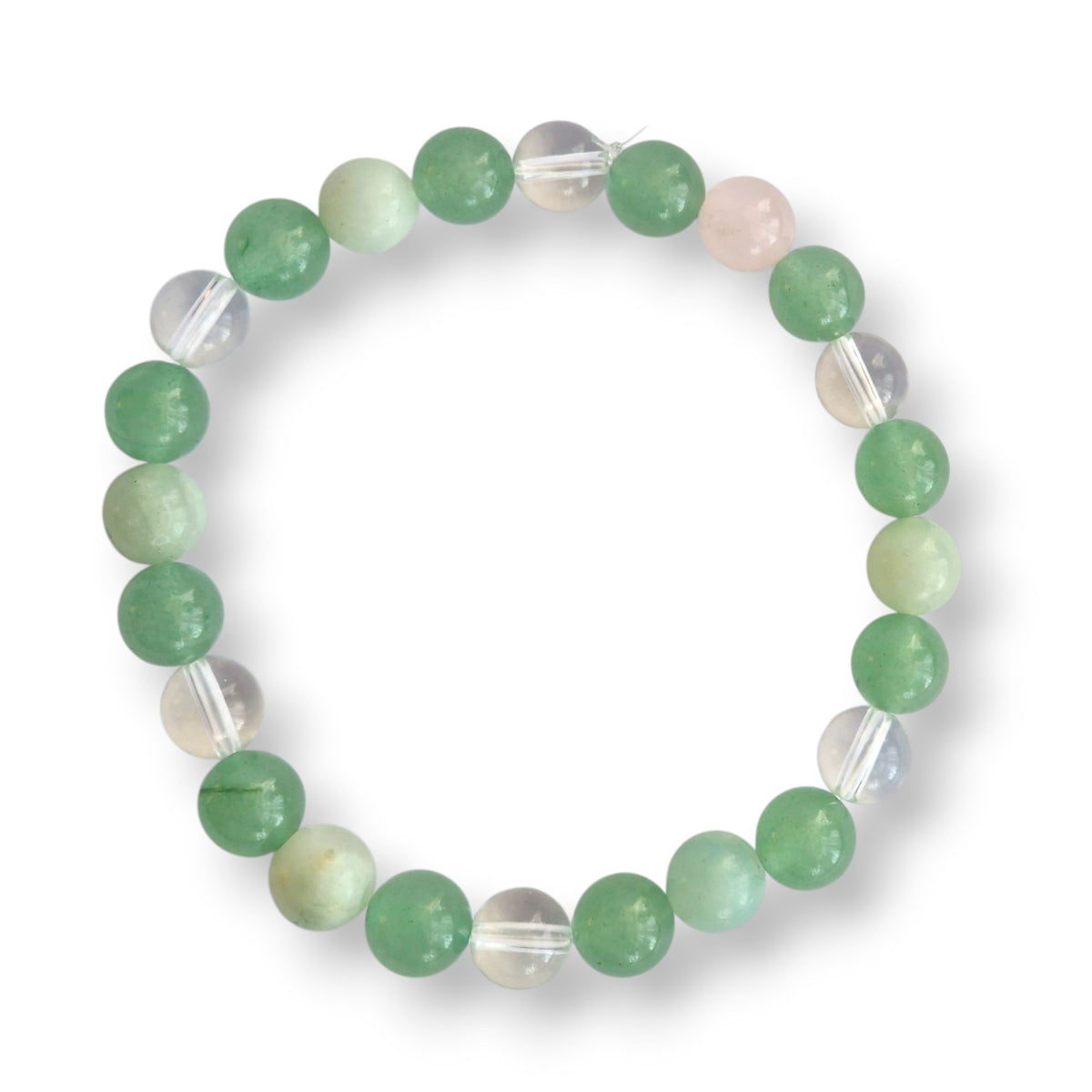
Aventurine is a variety of quartzite, which means it is a rock made up mostly of quartz grains packed tightly together. What sets it apart from plain quartz is the scattering of tiny platy mineral flakes trapped inside it. Those flakes catch the light and give the stone its characteristic glittery shimmer, so a polished piece looks as though fine sparkles have been suspended just below the surface. You can see this clearly across our green aventurine range, from tumblestones to bracelets.
The name has a charming backstory. In 18th century Venice, glassmakers on Murano reportedly created a sparkling glass by accident when copper filings fell into a batch of molten glass. They called it avventurina, from the Italian a ventura, meaning "by chance." When a natural stone turned up with a similar glittering look, it borrowed the name. So the man-made glass came first and the mineral was named after it, which is the opposite of what most people assume.
How aventurine sparkles
- Cause: Flat mica flakes inside the stone
- Effect: Light bounces off the flakes as a soft glitter
- Name: Aventurescence
Why aventurine sparkles
The shimmer has a proper name: aventurescence. It happens when light passes into the translucent quartz, strikes the flat flakes of mica suspended inside, and reflects back out at lots of small angles. Because the flakes sit at different orientations, you get many little glints rather than one mirror-like flash, which is why the effect looks like a dusting of glitter that shifts as you turn the stone.
In green aventurine those flakes are usually fuchsite, a chromium-rich variety of mica that also lends the stone its green colour. Different inclusions produce different sparkles and tints, which is how aventurine ends up in such a range of shades.
The colours of aventurine
Green is by far the most common and the colour most people picture, but aventurine is more varied than its reputation suggests. The shade depends on which mineral flakes are doing the sparkling:
- Green: the classic. Both the colour and the shimmer come from fuchsite mica. Ranges from pale mint to deep forest.
- Blue: a cooler, denser look, with the colour linked to inclusions such as dumortierite.
- Peach, orange and brown: warmer tones, typically from flakes of hematite or goethite.
- Grey and yellow: quieter, more neutral pieces that still carry the soft sparkle.
Green aventurine comes mostly from India, which supplies much of the world's stock. Blue and peach material is more often associated with Brazil and Russia. If you like green stones, it is worth comparing aventurine with jade and prehnite, which sit in a similar palette but are different minerals.
Aventurine at a glance
- Family: Quartzite (a quartz rock)
- Hardness: About 7 on the Mohs scale
- Sparkle: Aventurescence, from mica flakes
- Colours: Green, blue, peach, grey, brown
- Main source: India (green)
- Water: Brief rinse, dry well
- Sunlight: Avoid long exposure
How hard and durable is aventurine?
As a quartz-based stone, aventurine sits at roughly 7 on the Mohs hardness scale, the same broad band as amethyst and citrine. That makes it tough enough for rings, bracelets and necklaces worn day to day. One nuance: because aventurine is a rock packed with mica flakes rather than a single flawless crystal, its everyday durability can feel a touch lower than pure quartz, since those flakes are slightly softer. In practice it is still a hard, reliable stone, but it is sensible to avoid knocks against harder surfaces and to store pieces separately so they do not scratch each other.
Looking after aventurine
Aventurine is one of the easier stones to look after. Because it is quartz-based and hard, it tolerates a brief rinse under cool water with no trouble. Wipe it with a soft cloth, use mild soap if needed, and dry it properly rather than leaving it to soak. Avoid prolonged soaking and harsh chemicals, and keep it out of strong, prolonged sunlight, since some coloured stones can fade over time with heavy sun exposure.
For the full detail, see our guides on which crystals are safe in water and which crystals fade in sunlight. If your aventurine is set in jewellery, the gentlest approach is in how to clean crystal jewellery safely.
Choosing and wearing aventurine
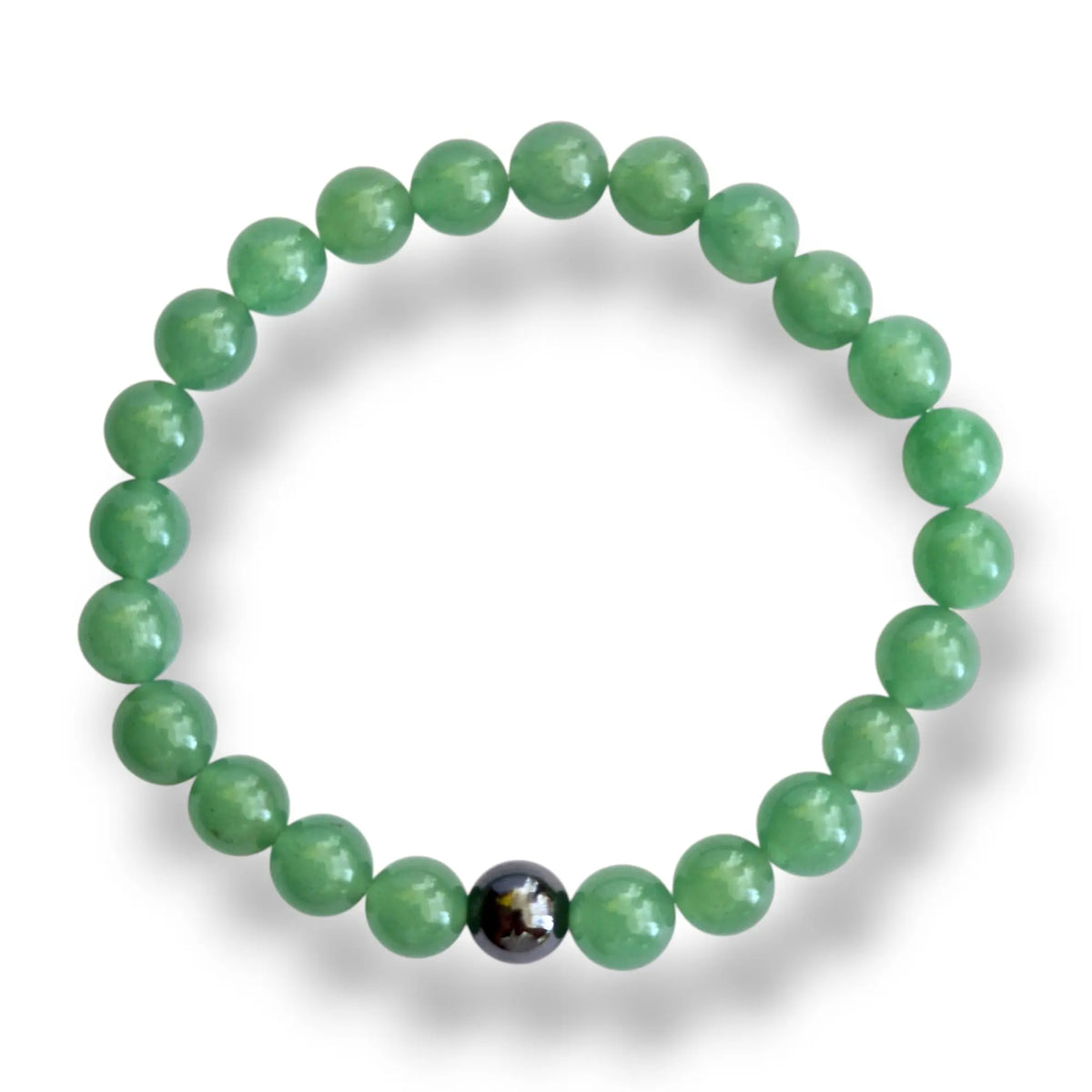
Aventurine is a forgiving stone to wear and to gift. The green pairs easily with neutrals, denim and gold-toned metals, and the gentle sparkle reads as understated rather than flashy. Tumbled beads are the most common format in bracelets and necklaces, where the rounded surface shows off the shimmer well. When you are choosing a piece, look for even bead matching, a translucency that lets light in, and a sparkle that actually moves as you tilt it, all signs of good natural material. For a polished gift, a single aventurine pendant on a simple chain, or a smooth palm stone, is hard to beat.
A quick note on goldstone. Goldstone is the man-made sparkling glass mentioned earlier, and it is occasionally sold loosely as "aventurine." It is easy to tell apart: goldstone has an intense, perfectly even copper glitter, while natural aventurine has a softer, patchier shimmer with real variation and a cloudy translucency. If the sparkle looks too uniform to be real, it usually is.
Aventurine FAQ
Can aventurine go in water?
Yes, briefly. It is a hard quartz-based stone, so a short rinse and a soft dry are fine. Avoid long soaking, salt water and harsh cleaning chemicals.
Is green aventurine the same as jade?
No. They can look similar at a glance, but jade is a different mineral. Aventurine usually shows its tell-tale inner sparkle (aventurescence), which jade does not.
How hard is aventurine?
Around 7 on the Mohs scale, so it is well suited to everyday jewellery. Store pieces separately so harder stones do not scratch them.
Why does my aventurine sparkle?
Because of tiny flat flakes of mica inside the quartz. Light reflects off them at many angles, creating the shimmer known as aventurescence.
Where does aventurine come from?
Most green aventurine is mined in India. Blue and peach varieties are more often associated with Brazil and Russia.
Shop aventurine
Browse our hand-checked green aventurine, in tumblestone, palm stone and bracelet form.
All Aventurine Aventurine Bracelet Aventurine Tumblestones Aventurine Palm StoneRelated reading
- Which crystals are safe in water
- Which crystals fade in sunlight
- How to clean crystal jewellery safely
Crystals and crystal jewellery are sold as decorative and collectable items. They are not a substitute for professional medical advice, diagnosis or treatment.