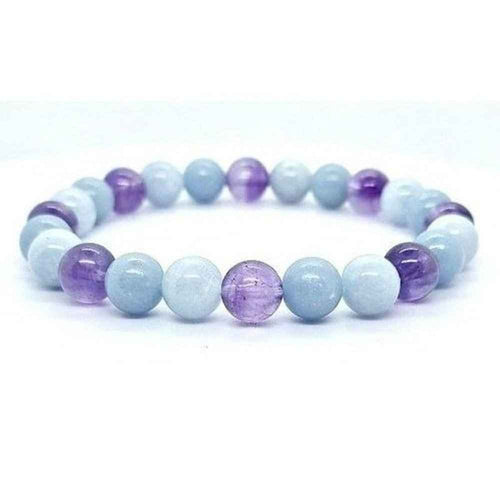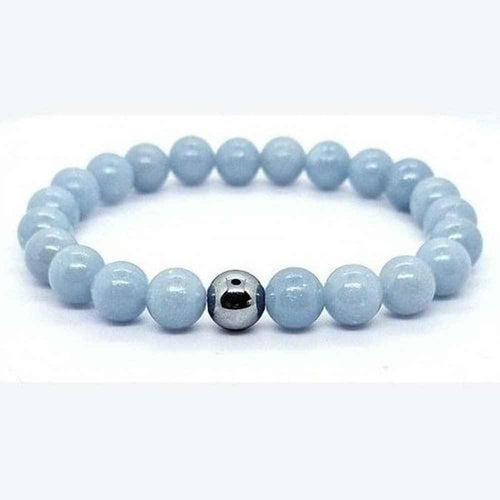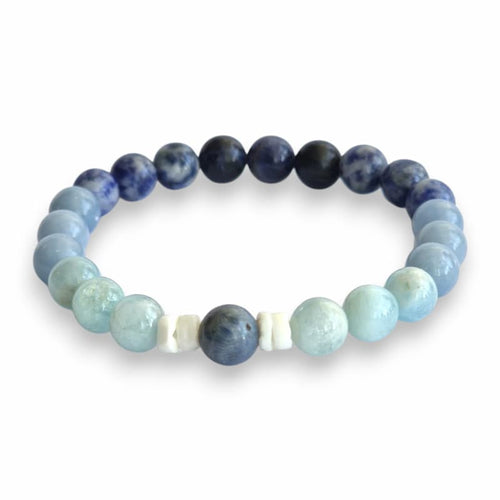
Quick answer
Angelite is the trade name for a pale blue variety of anhydrite, a calcium sulfate mineral. Its main draw is a soft, sky-blue colour, usually from Peru, often with white veining. Two things matter most: it is very soft (just 3-3.5 on the Mohs scale), so it scratches easily, and it is water-sensitive. Because anhydrite slowly turns back into gypsum when wet, you should never soak angelite. It is sometimes confused with celestite and the pricier larimar.
On this page
Angelite is loved for its gentle, sky-blue colour, but it is also one of the most delicate stones you can own, and one of the most misunderstood. Behind the pretty trade name sits a mineral with two important quirks: it is very soft, and it does not like water. Get those two things right and angelite will last beautifully. This guide explains what angelite really is, why water is its weakness, its colours, how to tell it from similar blue stones, and exactly how to care for it.
What is angelite?
"Angelite" is a trade name, not an official mineral name. The stone itself is anhydrite, a calcium sulfate with the formula CaSO4, and angelite is simply its soft pale-blue form. The name was coined for the gentle, sky-like colour, and most of the angelite on the market comes from Peru, where it was introduced commercially in the late 1980s.
The single most important fact about angelite is how soft it is: just 3 to 3.5 on the Mohs scale. That is softer than a copper coin, so it scratches and chips very easily and is best treated as a gentle, carefully-worn or display stone rather than an everyday ring. Its close mineral cousin is gypsum, which matters a great deal for how you look after it, as the next section explains.
Anhydrite, gypsum and why water matters
Here is the part most guides skip. Anhydrite means "without water." It is the dry form of calcium sulfate. Its cousin, gypsum, is the same calcium sulfate but with water built into its structure. The catch is that anhydrite is happiest dry: when it is exposed to water or constant damp, it slowly absorbs moisture and begins to convert back towards gypsum. In a polished angelite stone, that means the surface can turn dull, chalky or cloudy, and the piece can swell, crack or crumble over time.
That is why you should never soak angelite or clean it with water. It is the same reason its relative selenite (a form of gypsum) needs to stay dry, which we cover in our selenite care guide. Angelite belongs firmly on the "keep dry" list in our water-safe crystals guide.
Colours and look
Angelite's palette is gentle and fairly narrow, which is part of its calm appeal:
- Soft sky blue, the signature colour.
- Pale blue to blue-grey, cooler and more muted.
- Lilac-blue, with a faint violet tint.
- White veining and flecks, often with small reddish-brown spots from traces of hematite.
It is usually opaque to faintly translucent with a smooth, matte-to-soft sheen rather than a glassy shine. See the range in our angelite collection.
Angelite vs celestite and larimar
Several pale blue stones get muddled with angelite, and a couple are worth far more, so it pays to know the difference:
- Celestite (celestine), a close lookalike but a different mineral (strontium sulfate), usually seen as sparkling blue crystals in geodes.
- Larimar, a rarer, pricier blue pectolite from the Dominican Republic with a distinctive water-like patterning; angelite is sometimes offered as a cheaper stand-in, which is fine only if it is sold honestly.
- Blue calcite and blue chalcedony, which share a soft blue but differ in hardness and feel.
- Dyed howlite or magnesite, white stones dyed blue and occasionally passed off as natural blue stones.
Angelite's tells are its softness (it scratches very easily), its matte, opaque look, and its trademark white veining. For general checks, see our guide on how to tell if your crystals are real.
Care: keep it dry
Care warning
Never soak angelite, clean it with water, or leave it in a damp room. Because it is anhydrite, water makes it dull, chalky and can cause it to crack or crumble over time.
Angelite needs gentle handling on two fronts. Because it is so soft (3-3.5 Mohs), it scratches and chips far more easily than most stones, so it sits at the delicate end of our guide to the most durable gemstones for everyday wear. And because it is water-sensitive, it should be kept dry at all times.
To care for angelite: clean it only with a soft, dry cloth, never water; keep it away from humidity, heat, perfume, salt and household chemicals; and avoid bathing, swimming or washing your hands while wearing an angelite piece. Store it on its own, somewhere dry, away from harder stones that could scratch it. It is happiest as a pendant, a pair of earrings or a display stone rather than a knockabout ring or bracelet. See our how to store crystals guide for more.
How to choose angelite
Angelite is chosen for its calm colour and soft character. Look for:
- A blue you love, from soft sky blue to blue-grey or lilac.
- Even colour with attractive veining, since white veins are part of its charm.
- Honest labelling, confirming it is angelite (anhydrite) rather than larimar, celestite or a dyed stone.
- A gentle use, choosing pendants, earrings or display pieces and keeping the stone dry.
Shop genuine angelite
Real natural stone, clearly described and packed with care.
Angelite Collection Crystal Necklaces Crystal Jewellery Crystal GiftsSold as decorative jewellery, gifts and natural stone specimens. We make no medical or therapeutic claims. Read our full disclaimer.
Frequently asked questions
Is angelite a real crystal?
Yes. Angelite is a genuine natural stone, the pale blue form of the mineral anhydrite (calcium sulfate). "Angelite" is just its trade name.
Can angelite go in water?
No. Angelite is anhydrite, which absorbs water and slowly turns back into gypsum, going dull, chalky or crumbly. Keep it dry and clean it only with a soft cloth.
How hard is angelite?
Only 3 to 3.5 on the Mohs scale, which is very soft, so it scratches and chips easily and needs careful handling.
Is angelite the same as larimar?
No. Larimar is a rarer, harder and pricier blue pectolite from the Dominican Republic. Angelite is sometimes offered as a budget alternative, which is fine when sold honestly.
What is the difference between angelite and celestite?
They look alike but are different minerals: angelite is anhydrite (calcium sulfate), while celestite is celestine (strontium sulfate), usually seen as sparkling crystals in geodes.