Quick answer
Jasper is an opaque variety of quartz (chalcedony) that comes in almost every colour, with more than 50 trade names. It is hard and durable (6.5 to 7 on the Mohs scale) and water-safe when undyed. The one thing to know: not every stone sold as "jasper" is a true jasper, popular names like Dalmatian, Kambaba and Bumblebee are actually different rocks. Always buy from a seller who names the real material.
On this page
Jasper is one of the most varied stones you can collect. It turns up in almost every colour, and the jewellery trade uses more than 50 different names for it. That variety is exactly what makes it confusing, because not every stone sold as "jasper" is actually jasper. This guide explains what jasper really is, how it forms, the colours and varieties, which "jaspers" are genuine, how to spot a dyed or misnamed piece, and how to choose and care for it.
What is jasper?
Jasper at a glance
- Family: Quartz (chalcedony, SiO2)
- Colour: Almost every colour
- Transparency: Opaque
- Hardness: 6.5 to 7 on the Mohs scale
- Water: A brief rinse is fine when undyed
- Varieties: 50+ trade names
Jasper is an opaque variety of chalcedony, a microcrystalline form of quartz (silicon dioxide). It sits right next to agate and carnelian in the quartz family, but with one key difference: jasper is fully opaque. It contains up to around 20% of other minerals, mostly iron oxides, clays and fine silica, and those impurities give jasper both its rich colours and its solid, non-see-through look.
Because the quartz crystals in jasper are so tiny that you cannot see them without a microscope, the stone behaves as one dense, even mass. That structure is why it takes such a smooth, glassy polish and why no two pieces are ever quite the same. It is also tough, sitting at roughly 6.5 to 7 on the Mohs hardness scale, which is why it has been carved, polished and worn for thousands of years. The name comes from the Greek iaspis, meaning a "spotted" or "speckled" stone, a clue to its patterned character.
How jasper forms: silica-rich fluids seep through rock and slowly fill cavities, cracks and gaps between sediment, hardening into a fine, compact mass. As the silica sets it traps whatever is present, iron oxides, clay, even volcanic ash, and that is what creates jasper's colours and patterns. The landscape bands in picture jasper come from layers of sediment; the round "eyes" in ocean jasper form when silica crystallises in tiny spheres; the mosaic look of brecciated jasper happens when the stone breaks and is cemented back together. Every pattern is a frozen record of millions of years of geology.
How many colours and varieties of jasper are there?
Jasper colour families
- Red
- Yellow
- Brown
- Green
- Ocean
Iron and other minerals create the full range.
There is no single official count, but the honest answer is that jasper appears in virtually every colour, and lapidaries use more than 50 trade names for it. The colour always comes down to which minerals are mixed into the silica: iron oxides give reds, yellows and browns; iron silicates and chlorite give greens; manganese and other minerals add darker tones.
The varieties you will meet most often:
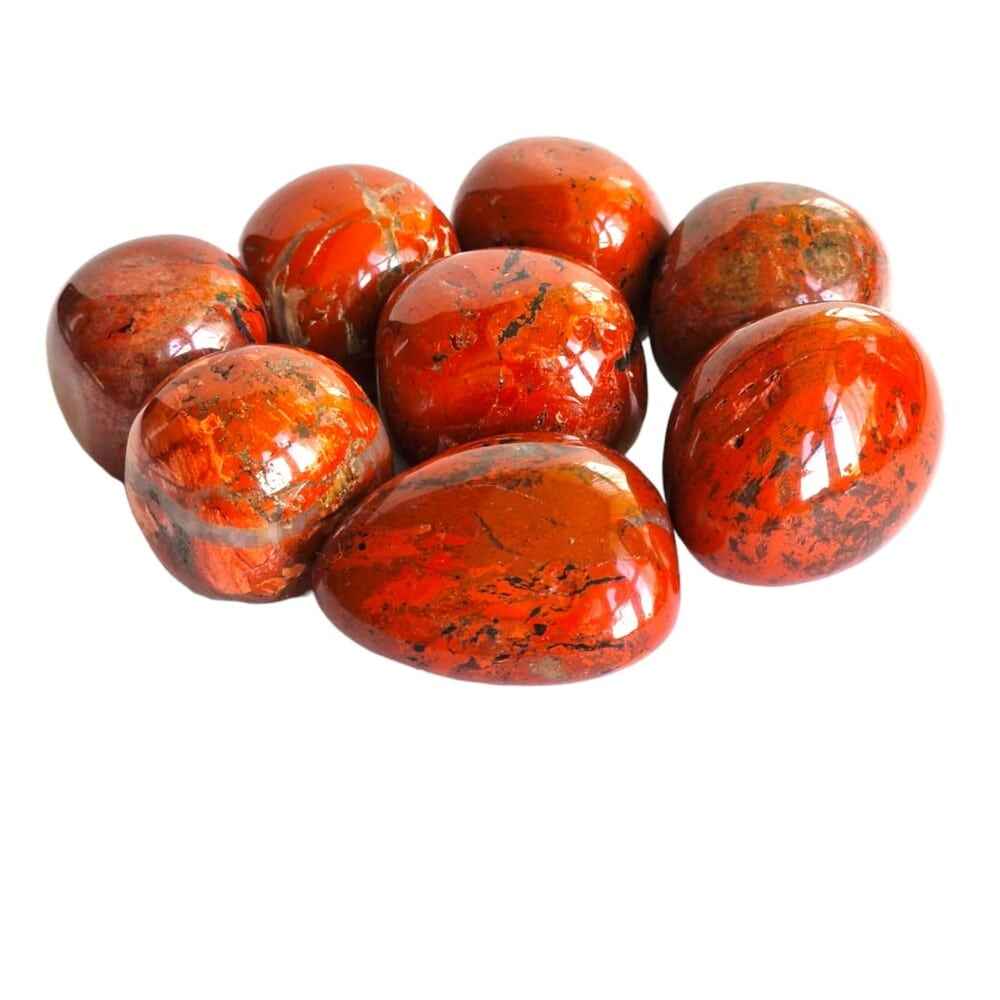
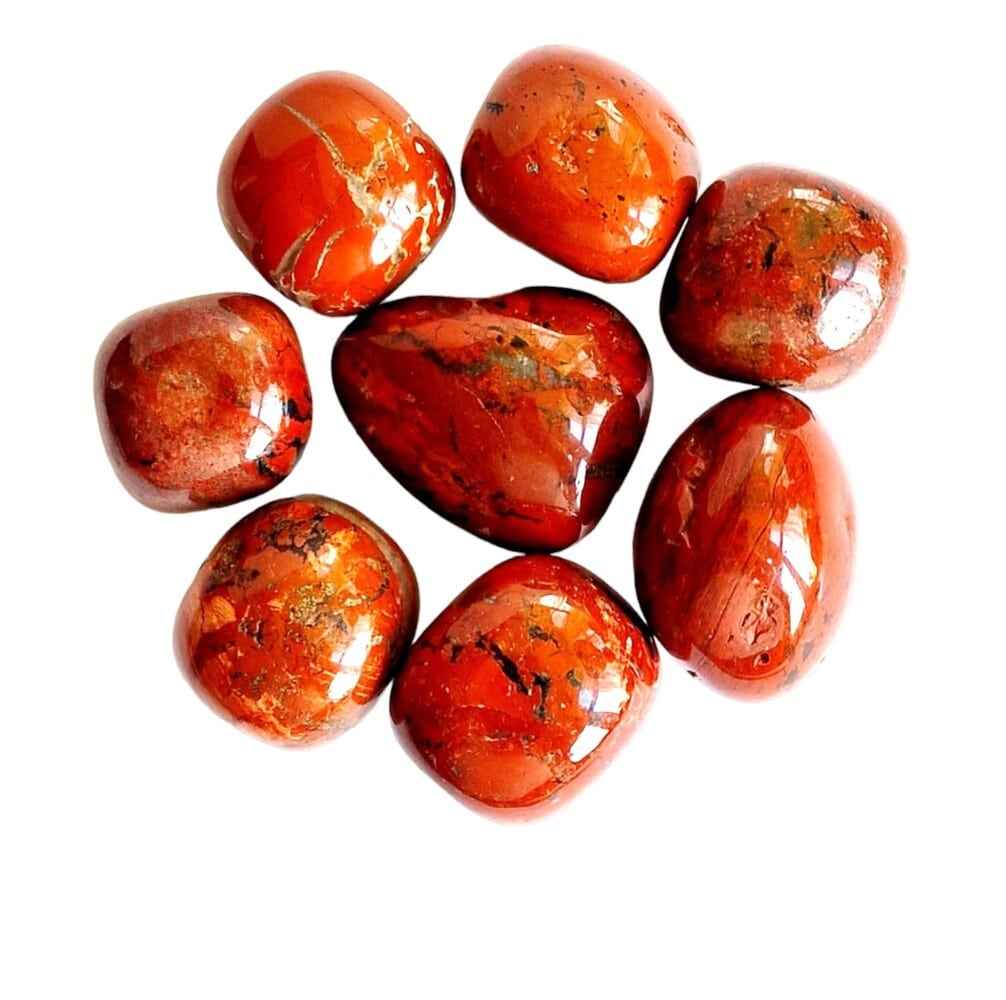
- Red jasper, coloured by iron oxide; the classic deep brick-red stone and the most widely available.
- Yellow and mustard jasper, warm tones from oxidised iron.
- Brown and picture jasper, tan and chocolate bands that can look like tiny desert landscapes.
- Green jasper, soft sage to deep forest, coloured by iron silicates.
- Poppy jasper, red and cream with round, flower-like orbs.
- Brecciated jasper, angular fragments re-cemented together, usually red with grey.
- Ocean jasper, greens, pinks and whites in rounded orb patterns; a genuine orbicular jasper.
- Mookaite, an Australian jasper in rich reds, yellows and mulberry tones.
So when someone asks how many colours jasper comes in, the short answer is nearly all of them. Because each piece is unique, jasper is a favourite for one-of-a-kind jewellery and display stones. Browse the full range in our jasper collection.
True jasper vs. trade names (what most guides will not tell you)
True jasper vs trade names
| True jasper | Sold as jasper, but not |
|---|---|
| Red, yellow, brown, green | Dalmatian = igneous rock |
| Picture and ocean jasper | Kambaba = sedimentary |
| Brecciated and poppy | Leopard skin = rhyolite |
| Mookaite (Australia) | Bumblebee = volcanic |
| All silica-rich quartz | Bumblebee: contains arsenic |
Here is where it pays to be honest, because the lapidary trade is loose with the word "jasper." The name sells, so it gets attached to all sorts of patterned, opaque stones, some genuine jasper and some completely different rocks. Knowing the difference helps you buy with confidence.
Genuine jaspers include red, yellow, brown, green, picture, brecciated, poppy, ocean and mookaite jasper, all silica-rich stones in the quartz family.
Often sold as "jasper" but actually something else:
- Dalmatian "jasper", really a pale igneous rock; the black spots are usually black tourmaline or a similar mineral.
- Kambaba "jasper", a green-and-black sedimentary stone, not a classic quartz jasper.
- Leopard skin "jasper", an orbicular volcanic rock (rhyolite).
- Bumblebee "jasper", a striking yellow-black-orange volcanic stone from Indonesia. Important: it contains arsenic-bearing minerals, so wash your hands after handling raw pieces and do not inhale dust if it is cut or sanded.
None of this means the misnamed stones are "bad", many are beautiful. It just means you should know what you are actually buying. We describe every stone honestly by its real material.
How to spot genuine, untreated jasper
Jasper is rarely faked outright, but it is sometimes dyed to brighten dull material or to imitate a rarer variety. Use these checks together:
- Colour transitions. Natural jasper has soft, irregular blends. Dye often pools in cracks or looks unnaturally uniform and vivid.
- Polish and weight. Real jasper feels cool and solid, takes a glassy polish, and is hard enough not to scratch easily with a steel blade.
- Rainbow or neon colours. Electric blues and purples in cheap tumbles are usually dyed.
- Reconstituted material. Very cheap, perfectly uniform "jasper" beads can be powdered stone bonded with resin rather than solid rock.
- Honest source. A genuine description tells you the real stone, not just a catchy trade name.
For a full walkthrough, see our guide on how to tell if your crystals are real.
Durability, water and care
Good news on both counts, with one exception. With a hardness of around 7, jasper is one of the more durable stones for everyday wear, ideal for bracelets and pocket stones. It is also water-safe for a quick rinse, since it is quartz-based and does not dissolve. The exceptions are dyed pieces (water can leach the dye) and bumblebee "jasper" (keep it dry). For the full list, see our water-safe crystals guide.
To keep jasper looking its best: wipe it with a soft, slightly damp cloth and dry it; avoid harsh chemicals, bleach and prolonged heat; remove jasper jewellery before swimming, showering or applying perfume; and store it away from harder stones so it does not get scratched, see how to store crystals.
How to choose jasper
Because jasper is so varied, choosing a piece is mostly about pattern and finish rather than clarity or sparkle. Look for:
- A pattern you love, since each piece is unique, bold red, soft landscape bands, or busy orbs.
- An even, glassy polish with no rough or chalky patches.
- Clean drill holes on beads, with no chips or cracks.
- Honest naming, so you know if a stone is dyed or a trade-name rock rather than true jasper.
Shop natural jasper
Real natural stone, clearly described and packed with care.
Jasper Collection Crystal Bracelets Tumbled Stones Crystal GiftsSold as decorative jewellery, gifts and natural stone specimens. We make no medical or therapeutic claims. Read our full disclaimer.
Red jasper, in stock now
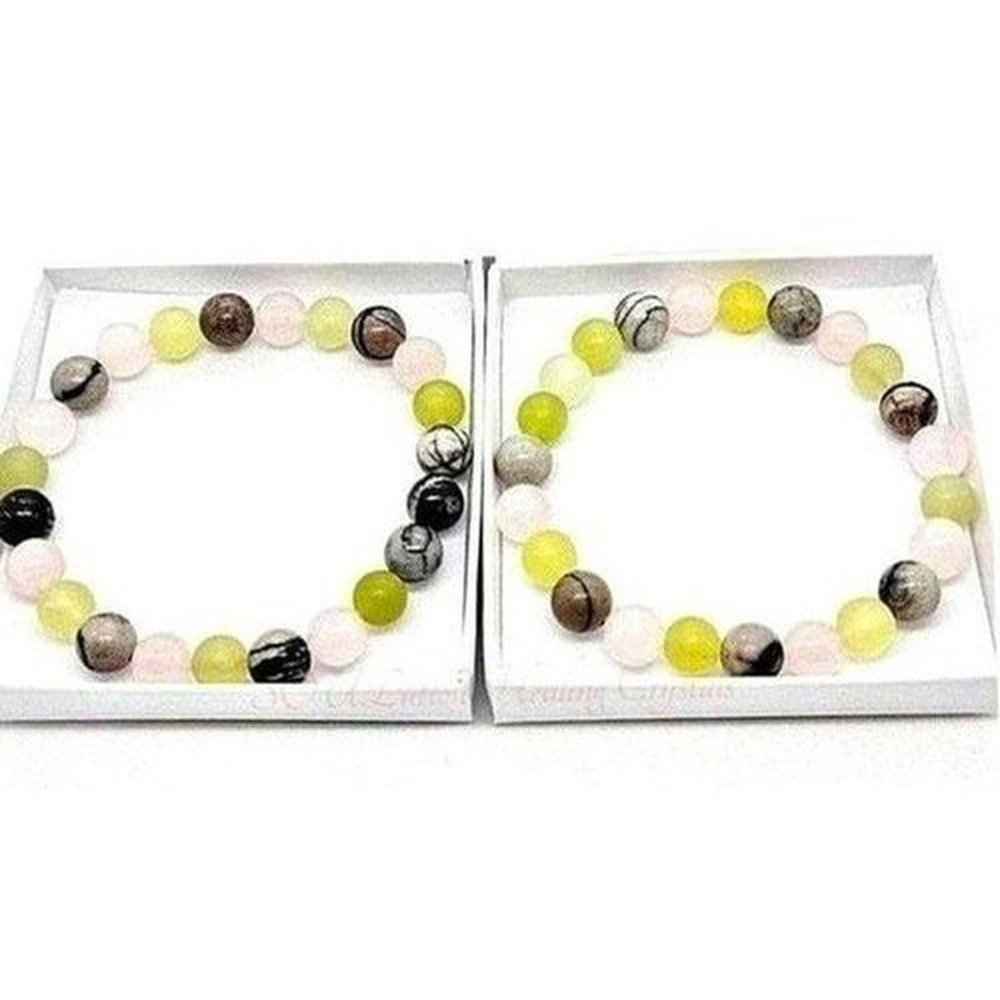
Genuine red jasper as polished tumblestones and in beaded bracelets hand-strung in the UK.


Frequently asked questions
How many types of jasper are there?
There is no official figure, but the trade uses more than 50 named varieties, and jasper occurs in almost every colour.
Is jasper a real crystal?
Yes. It is a genuine, naturally occurring form of quartz (chalcedony), just in an opaque, patterned form.
How hard is jasper?
Around 6.5 to 7 on the Mohs scale, hard and durable enough for everyday jewellery.
Can jasper go in water?
A brief rinse is fine for natural, undyed jasper. Avoid soaking dyed pieces and keep bumblebee "jasper" dry.
What is the difference between jasper and agate?
Both are chalcedony (quartz). The difference is transparency: agate is translucent and often banded, while jasper is fully opaque.