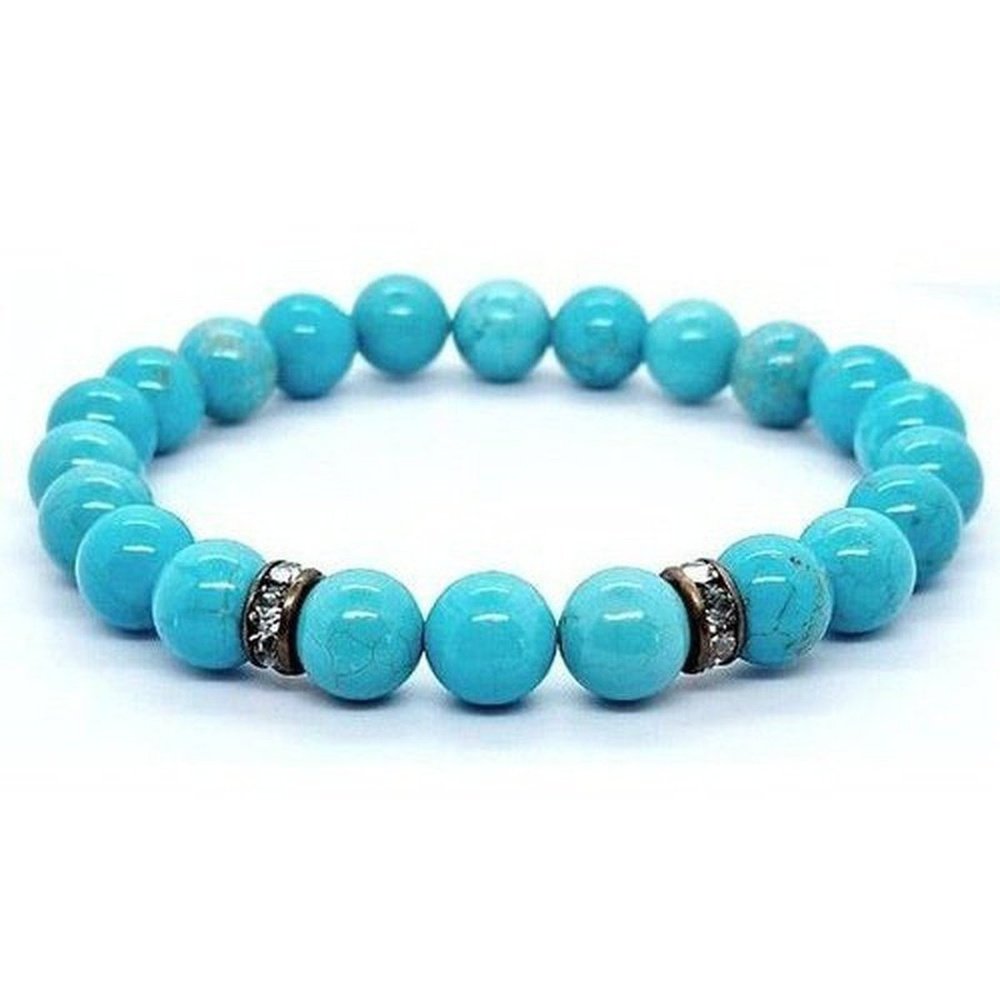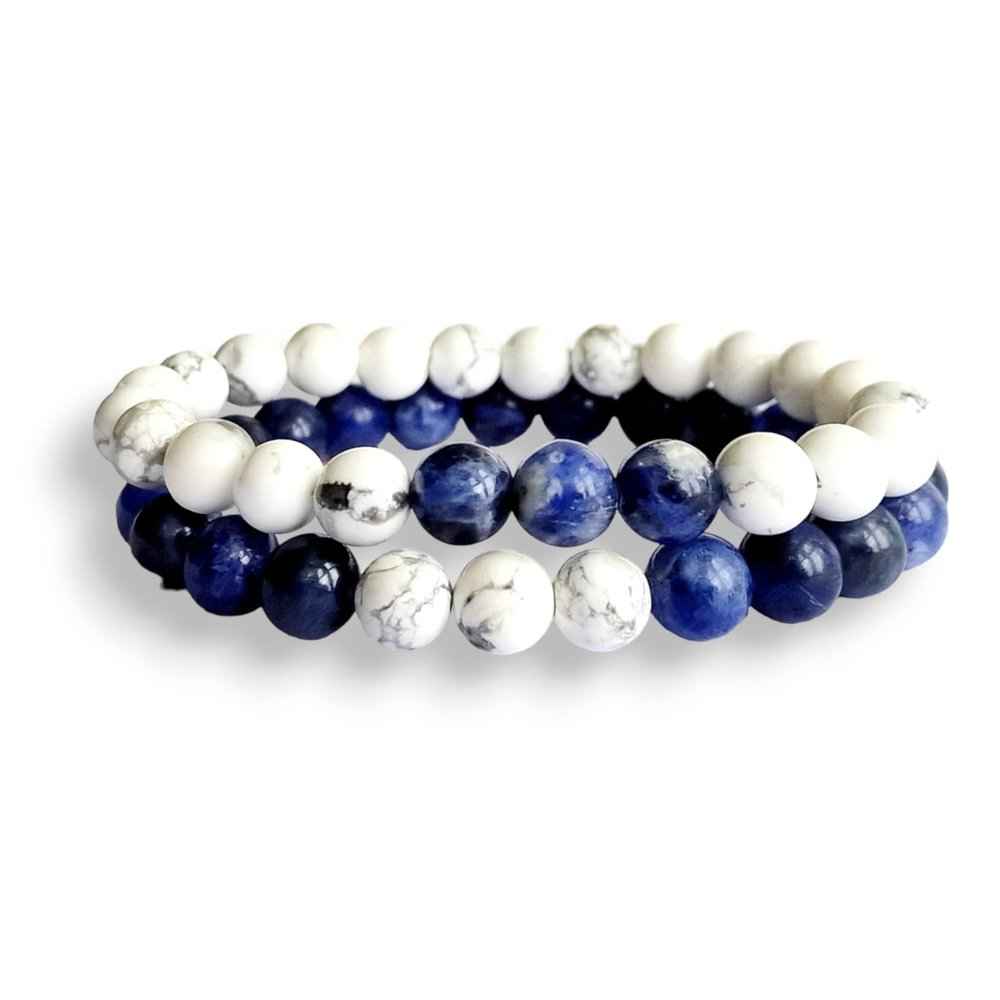
Turquoise is one of the most copied stones on the market. Because genuine turquoise is fairly scarce and soft, a large share of what is sold online is dyed howlite, dyed magnesite, reconstituted (crushed-and-glued) stone, or plain resin. None of that makes a piece "bad", but you deserve to know what you are buying. Here are six simple checks you can do at home, plus a quick word on the honest trade terms you will see.
On this page
What turquoise actually is
Turquoise is a copper-aluminium phosphate mineral, prized for thousands of years for its sky-blue to blue-green colour. It is relatively soft (Mohs 5 to 6) and porous, which is exactly why so much of it is treated or imitated. Knowing what genuine turquoise looks and feels like is the best safeguard against overpaying for dyed stand-ins.
Natural turquoise vs dyed howlite
Natural turquoise
- Uneven colour, several shades of blue-green
- Fine, recessed brown or black veins
Dyed howlite
- Flat, even blue
- Web-like veins where the dye pools in lines
1. Look at the veining (matrix)
Natural turquoise forms inside a host rock, so its veining is usually irregular, fine and slightly recessed, often brown, grey or black. Dyed howlite has natural grey veins too, but after dyeing they look even, web-like and sit on the surface, with the dye pooling darker inside the lines. If the pattern looks too tidy and "drawn on", be cautious. The howlite we stock is undyed and sits in our howlite collection.
2. Check the colour
Genuine turquoise ranges from sky blue to blue-green, and the colour varies subtly across a single stone. Dyed imitations are often a flat, saturated, almost electric blue that looks identical everywhere. A colour that is "too perfect" is a common giveaway.
3. The acetone test (on a hidden spot)
Dab a cotton bud with a little acetone (nail-polish remover) on an area you cannot see. If blue colour transfers onto the bud, the stone has been dyed. Genuine turquoise will not release colour. Do this gently, on a small spot only.
The acetone test
Natural: bud stays clean
A cotton bud with a little acetone, touched to a hidden spot, picks up no colour.
Dyed: blue rubs off
The bud turns blue because the colour sits on the surface.
Test gently, on a small hidden spot only.
4. Price and source
Real, untreated turquoise in a finished piece is rarely very cheap. If a large "turquoise" bracelet costs a couple of pounds, it is almost certainly dyed howlite or magnesite, which are perfectly nice natural stones, just not turquoise. Honest sellers tell you which it is, and so do we in every product description.
5. Hardness and feel
Turquoise sits around 5 to 6 on the Mohs scale and feels cool and stone-like. Plastic or resin fakes feel lighter and warmer, and may show mould lines or tiny bubbles. Howlite and magnesite feel like stone but are softer (about 3.5), so dyed pieces tend to show more wear over time.
Mohs hardness: where turquoise sits
- Howlite 3.5
- Turquoise 5 to 6
- Quartz 7
6. "Stabilised" and "reconstituted": what they mean
Two honest industry terms worth knowing, because they are not the same as "fake":
| Term | What it is | Still real turquoise? |
|---|---|---|
| Stabilised | Genuine turquoise hardened with a little resin so it can be cut and polished | Yes, very common |
| Reconstituted | Turquoise powder mixed with binder and pressed into shape | Partly, not a solid natural stone |
| Dyed howlite / magnesite | A different natural stone, coloured to look like turquoise | No, a stand-in |
Quick comparison
| Natural turquoise | Dyed howlite / magnesite | |
|---|---|---|
| Colour | Varies subtly, blue to blue-green | Flat, very even, often electric blue |
| Veining | Irregular, fine, recessed | Even, web-like, dye pooled in lines |
| Acetone | No colour transfer | Blue rubs off |
| Hardness | 5 to 6 | About 3.5 (softer) |
| Price | Higher | Very low |
Shop natural stone jewellery at Crystals Healing UK
Every piece is described honestly by stone type, so you always know exactly what you are buying. Free UK delivery over £30.
How to care for turquoise
Turquoise and its common stand-ins are porous and water-sensitive, so keep them away from water, perfume and lotion, and wipe with a soft dry cloth. Put jewellery on after applying cosmetics, and take it off before washing, swimming or exercise. Store it away from harder stones to avoid scratches. For the full list of which stones can take a rinse and which must stay dry, see our water-safe crystals guide.
Frequently asked questions
Is dyed howlite a scam?
Not if it is sold honestly. Howlite and magnesite are real natural stones and make attractive, affordable jewellery. The problem is only when they are sold as genuine turquoise at turquoise prices.
What is African Turquoise?
"African Turquoise" is actually a speckled jasper, not true turquoise, named for its look. It is a lovely, durable natural stone in its own right: see our African Turquoise bracelet and tumblestone cube.
Can I wear turquoise every day?
Yes, with care. Because it is soft and porous, remove it before washing, swimming or exercise, and store it away from harder stones to avoid scratches.
Does the acetone test damage the stone?
No, used gently on a small hidden spot it will not harm genuine turquoise. It only removes surface dye from treated stones.
Sold as decorative jewellery and natural stones. We make no medical, therapeutic, spiritual or supernatural claims about the stones.