Amethyst is one of the most copied stones on the market, so it is worth knowing what you are buying. The good news is that most checks are simple, need no special tools, and do not risk damaging your stone. This guide walks through what real amethyst is, six quick checks, and what terms like dyed, glass and lab grown actually mean.
On this page
- What real amethyst is
- Amethyst: six checks for real vs fake
- Real, lab grown, dyed or glass
- Is amethyst safe in water?
- Where to buy amethyst you can trust
- Amethyst FAQ
Amethyst at a glance
Quick answer: real amethyst is purple quartz (Mohs 7). The most reliable signs are uneven colour or colour zoning, no internal air bubbles, a cool feel, and enough hardness to scratch glass. Perfectly even, glassy colour with tiny round bubbles points to glass. If you cannot tell, a trustworthy seller will tell you whether a stone is natural, dyed or lab grown.
What real amethyst is
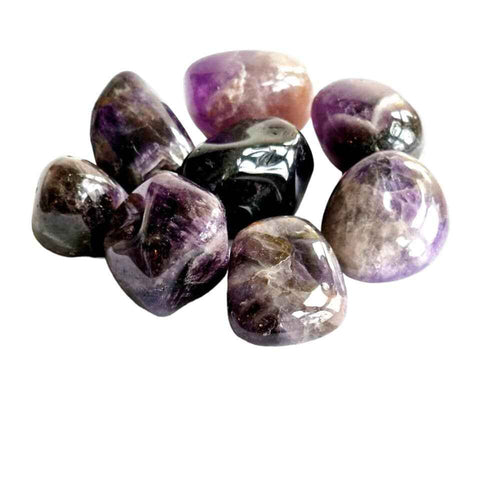
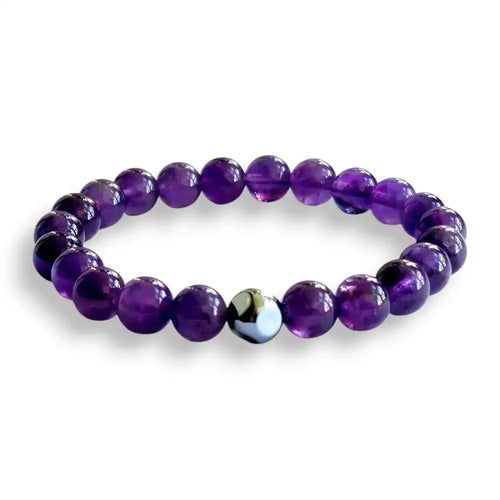
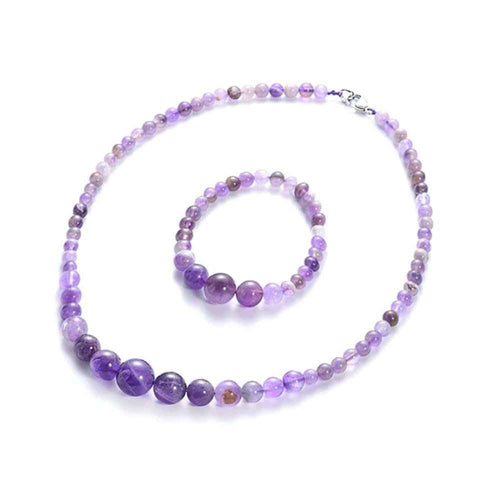
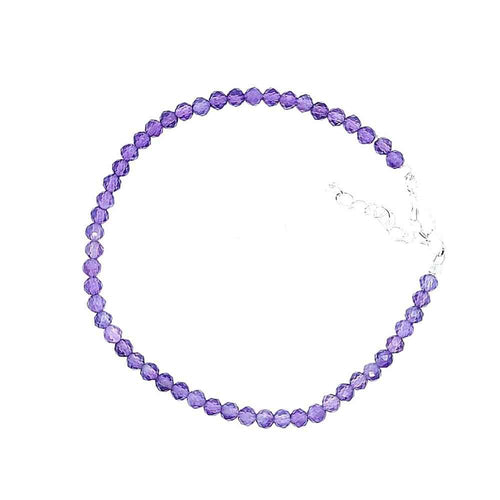
Amethyst is the purple variety of quartz (silicon dioxide). Its colour, from pale lilac to deep violet, comes from traces of iron combined with natural irradiation in the ground. Like all quartz it is 7 on the Mohs hardness scale, which is why it wears well in everyday jewellery. Natural amethyst very often shows uneven colour, with darker and lighter areas known as colour zoning. That natural unevenness is one of your best clues. You can see the amethyst we stock in our amethyst collection.
Amethyst: six checks for real vs fake
Start with the checks that cannot harm your stone.
- Look at the colour. Natural amethyst usually has uneven colour or visible zoning. A flawless, perfectly even purple throughout can be a sign of glass or a lab grown stone.
- Check for bubbles. Hold it to the light and look inside. Tiny round air bubbles mean glass. Natural quartz may have wisps or veils, but not perfectly round bubbles.
- Feel the temperature. Quartz feels cool and warms slowly. Glass also feels cool, but plastic warms up quickly in your hand, which rules a plastic imitation straight out.
- Think about price and consistency. A large, deeply saturated, flawless piece at a very low price is a warning sign. Natural stones vary.
- Look for dye in cracks. On dyed stones the colour often gathers more strongly inside cracks and pits. Even, natural looking colour that follows the crystal, not the cracks, is a good sign.
- Hardness, carefully. Quartz (7) will scratch glass (about 5.5), but this risks marking a setting or the test surface, so only use it as a last resort on a rough, inconspicuous spot, never on a polished face.
Real, lab grown, dyed or glass
These words get mixed up, so here is the plain version:
- Natural amethyst: formed in the ground, purple from iron and irradiation. This is what most people mean by real.
- Lab grown (synthetic) amethyst: grown in a laboratory, but chemically and physically the same quartz. It is real amethyst, just not natural. It is often very clean and very even in colour. Reputable sellers should disclose it.
- Dyed quartz or agate: a different, paler stone coloured purple with dye. The dye can fade and often pools in cracks. This is not real amethyst.
- Glass: not a stone at all. Look for bubbles and a flawless, uniform colour.
Worth knowing: most yellow citrine is actually amethyst that has been heated, which is still genuine quartz. Heating is normal and disclosed, not faking.
Is amethyst safe in water?
As a quartz at Mohs 7, amethyst is generally fine for a brief rinse in cool water, dried straight away. Avoid soaking, salt water and hot water, and keep it out of prolonged strong sunlight, which can fade the purple over time. Full details are in our water safe crystals guide and how to clean crystals.
Where to buy amethyst you can trust
The simplest protection is to buy from a seller who describes the stone clearly and states any treatment. At Crystals Healing UK we keep product descriptions factual and note when a stone is treated or dyed.
Shop genuine amethyst at Crystals Healing UK
Honestly described natural amethyst. Free UK delivery over £30.
Amethyst FAQ
Is lab grown amethyst real?
Yes. Lab grown amethyst is genuine quartz with the same composition as natural amethyst. It is real, just not natural, and a good seller will tell you which one you are buying.
How can I spot fake amethyst quickly?
Look for perfectly even colour and tiny round air bubbles, which point to glass, and dye that gathers in cracks, which points to a dyed stone. Natural amethyst usually has some uneven colour.
Does real amethyst have colour zoning?
Often, yes. Patches of darker and lighter purple are common in natural amethyst and are a helpful sign that a stone is real.
Why is some amethyst so cheap?
Very low prices on large, flawless, deeply coloured pieces can indicate glass or dyed stone. Genuine amethyst varies in colour and clarity.
Can amethyst go in water?
A brief rinse is usually fine, then dry it at once. Avoid soaking, salt water and hot water, and keep it out of strong sunlight to protect the colour.
Related reading
Our products are sold as decorative jewellery, gifts and home accessories. We make no medical, therapeutic, spiritual or supernatural claims about them. If you have a health concern, please consult a qualified medical professional.