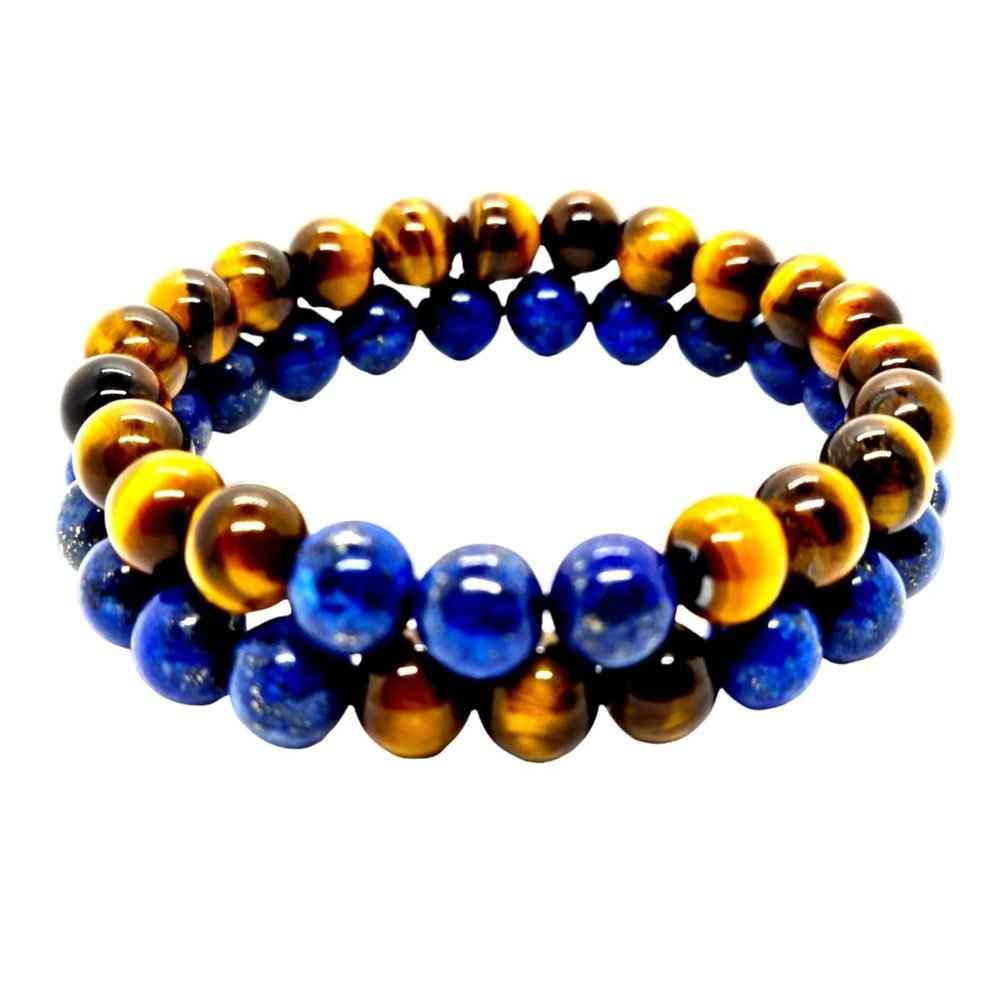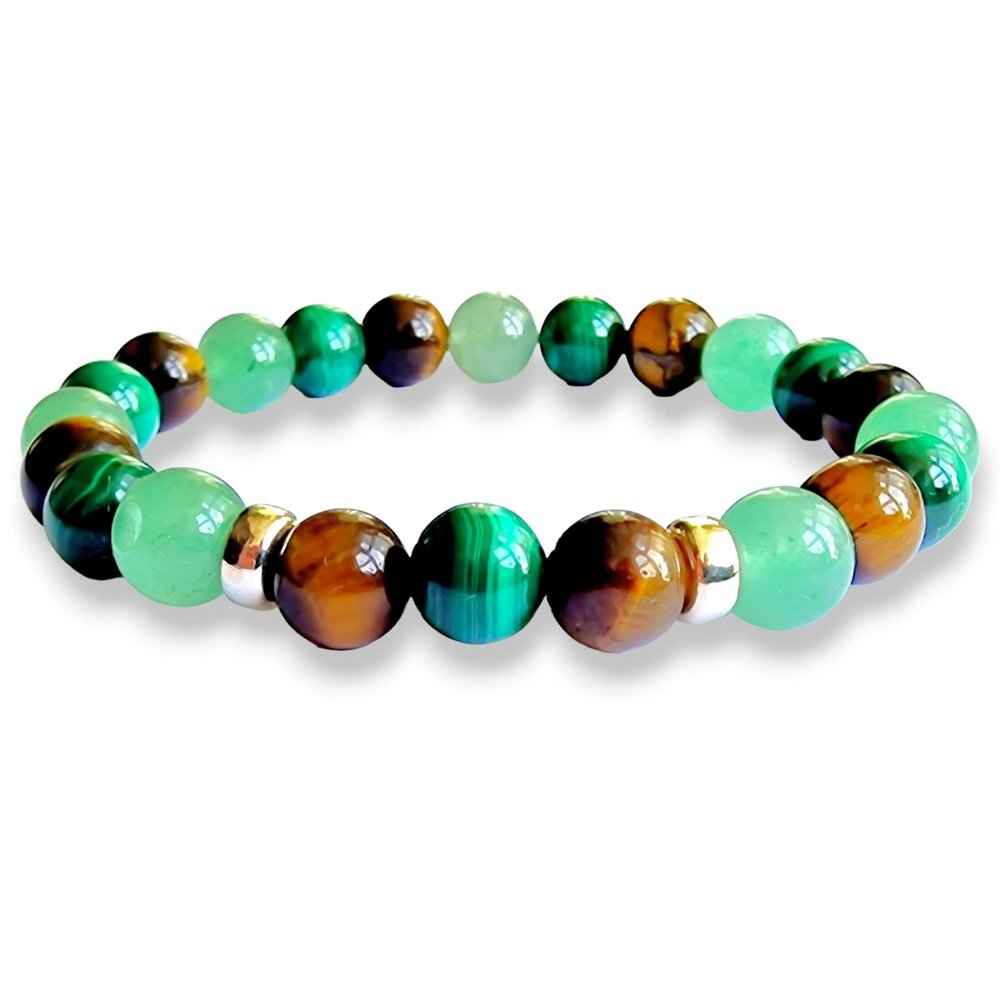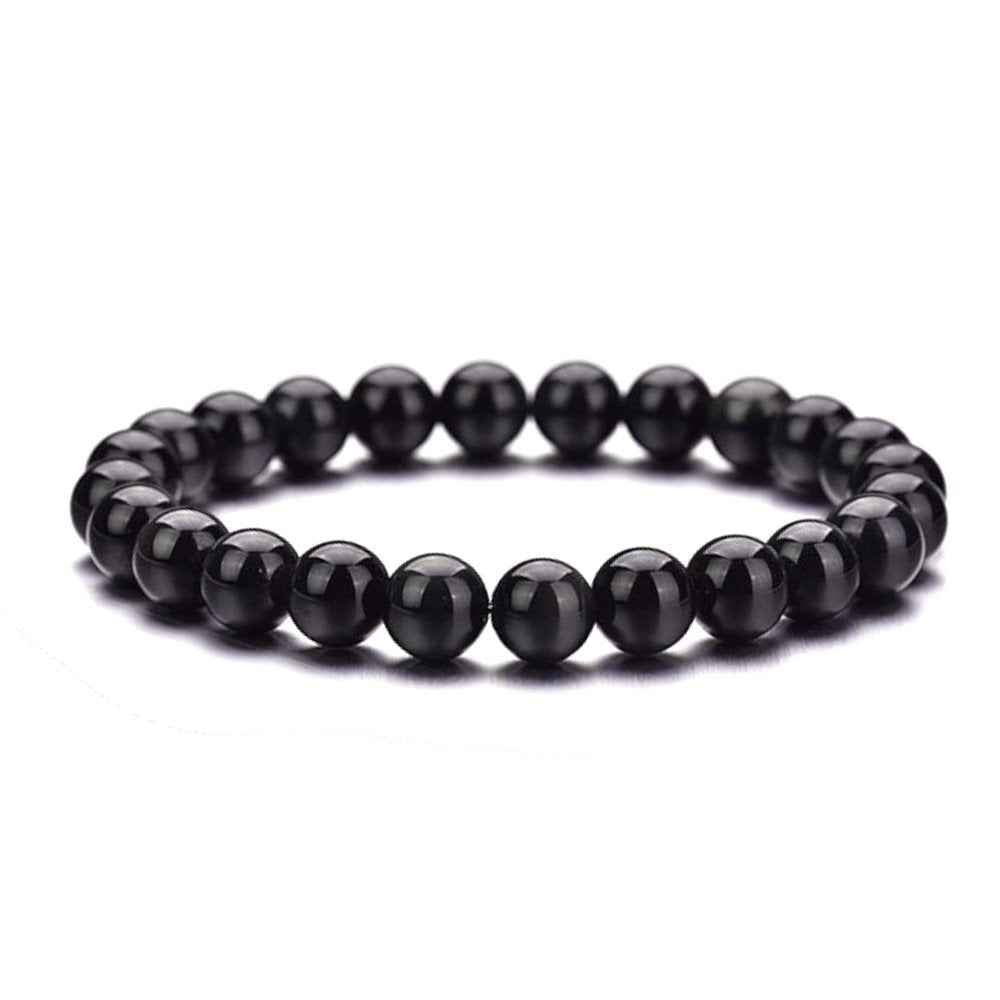
Handmade jewellery is assembled by a person rather than stamped out by machine. With natural stone that matters twice over, because the beads are chosen individually, so colour and pattern vary from piece to piece. Genuine handmade work shows even knots, secure fittings and small natural variations, not identical, flawless repetition.
Handmade crystal jewellery: what it really means
Two bracelets made from the same stone will never look exactly the same. That is not a fault, it is the point. Natural stone varies in colour, banding and clarity, and when a person strings each piece by hand they choose which beads sit together. Machines cannot do that, which is why mass-produced stone jewellery so often looks flat and uniform, and why it usually means dyed or reconstituted material.
This guide covers what handmade actually means, how to tell genuine handmade work from a mass-produced piece sold as handmade, what to check before you buy, and how to look after it. Browse our natural stone jewellery to see how genuine stone varies from piece to piece.

What handmade actually means
The word is used loosely. In practice there are three levels, and they are worth telling apart before you spend anything.
- Handmade: a person selects the materials, assembles the piece and checks the finish. Each one passes through someone's hands.
- Hand-finished: machine-made components, put together or polished by hand. Better than mass-produced, but not the same thing.
- Mass-produced: identical items made at scale, usually with dyed or reconstituted stone chosen for uniformity rather than quality.
None of these is dishonest on its own. The problem is when the third is sold using the language of the first.
Handmade vs mass-produced jewellery
Both have their place, but they are quite different. Here is how they compare.
Handmade vs mass-produced jewellery
Handmade
- Each piece is unique
- Made with attention to detail
- Stones selected individually
- Genuine stone, clearly named
- Usually repairable
Mass-produced
- Identical, repeated pieces
- Machine-made at speed
- Mixed, variable stone quality
- Often vague about materials
- Widely available everywhere
How we choose our pieces

Every piece we sell is hand-selected and packaged in the UK. We choose genuine natural stone for colour and size, and check each piece before it is sent. Bracelets come on stretch or adjustable cord in bead sizes from 4mm to 12mm; necklaces use raw points, polished pendants or faceted stones on chains and cords. Where a piece has silver-tone or gold-tone accents, those are plated findings, and the listing says so rather than implying solid metal.
Because the stone is real, batches differ. A rose quartz bracelet from this month's stock may be a shade deeper than one from last month. We would rather tell you that up front than promise an exact match to a photograph.
Five ways to spot genuine handmade jewellery
These checks work on any seller's pieces, including ours.
- Look for variation between listings. If every photographed piece is identical down to the banding, it is machine-sorted stock, not hand-selected stone.
- Check the knots and fittings. Neat, tucked knots, jump rings closed flush, a clasp that runs smoothly. Sloppy assembly is the most common tell.
- Read what the stone actually is. A real maker names the material and says when it is dyed, heat-treated or man-made. Vague words like "crystal quartz stone" usually mean glass.
- Ask where it was made. A maker can answer that in one sentence. A reseller changes the subject.
- Feel the finish. Beads should be smooth with no rough drill holes, and the piece should sit evenly rather than twisting.
Choosing a bead size
Bead size changes the character of a bracelet more than the stone does. Smaller beads sit close to the wrist and stack well; larger beads read as a single statement piece.
Bracelet bead sizes compared
- 4mmdelicate
- 6mmeveryday
- 8mmclassic
- 10mmbold
- 12mmstatement
Circles are drawn in proportion to each other.
4mm and 6mm suit stacking and smaller wrists. 8mm is the classic size and the most common choice for men's crystal jewellery. Before ordering, check the bracelet size guide.
Why no two pieces match
Natural stone forms over millions of years under conditions that were never identical twice, so no two beads are either. Amethyst runs from pale lilac to deep purple in the same seam. Tiger's eye shifts its band of light depending on how the fibres were cut. Lapis carries different amounts of pyrite and calcite.
This is why a handmade piece is genuinely one of a kind rather than a marketing line, and why our listings say colour will vary instead of promising an exact match. If you want two bracelets that look similar, ordering them together makes that far more likely, since they will usually come from the same batch. Browse amethyst, lapis lazuli or the full crystal bracelets range.
If you would rather make your own
Plenty of people find this article looking for a starting point rather than a purchase, so here is the honest short version. You need round-nose pliers, wire cutters, a bead mat, and either 0.8mm stretch cord or beading wire with crimps. Beaded bracelets and simple earrings are the sensible first projects because they use little material and forgive mistakes. Buy loose beads from a bead supplier rather than cutting up finished jewellery, and expect the first few attempts to look handmade in the wrong sense. There are good free tutorials for everything beyond that, and we would rather point you at them than pretend this page is one.
Caring for handmade jewellery
- Store separately: keep pieces apart so stones and clasps do not scratch each other.
- Avoid harsh chemicals: put jewellery on after perfume and skincare, and keep it away from cleaning products.
- Clean gently: wipe with a soft cloth; for tarnished silver use a silver polishing cloth.
- Mind water-sensitive stones and cord: do not soak stretch bracelets, and keep stones like lapis and selenite dry. See our jewellery cleaning guide and water-safe crystals guide.
Handmade jewellery FAQ
What does handmade jewellery mean? It means a person selected the materials, assembled the piece and checked the finish, rather than a machine producing identical items at scale. With natural stone it also means the beads were chosen individually for colour and quality.
How can I tell if jewellery is really handmade? Look for variation between listings, neat knots and flush-closed fittings, a clear description of the actual material, and a maker who can say where the piece was made.
Why do two handmade bracelets look slightly different? Because natural stone varies. Colour, banding and clarity differ between batches and even between beads in the same strand.
Is handmade jewellery more expensive? Usually a little, because a person's time goes into every piece and genuine stone costs more than dyed glass. It is also generally repairable and made to last, which mass-produced jewellery rarely is.
Is handmade jewellery better quality? Often, though not automatically. Quality still depends on the maker, the stone and the fittings used. The five checks above matter more than the word itself.
Where can I buy natural stone jewellery in the UK? Ours is hand-selected and packaged in the UK, with free UK delivery over £30. Start with bracelets, necklaces or crystal gifts.
Can a beginner make handmade jewellery? Yes. Beaded bracelets and simple earrings need few tools and are the usual starting point.
Related reading
- Crystal Jewellery Guide: types, styles and how to choose
- Crystal Bracelet Size Guide: how to measure your wrist
- How to Clean Crystal Jewellery Safely
- Crystal Gift Guide: ideas for every occasion
Shop
- All Crystal Jewellery
- Crystal Bracelets and Crystal Necklaces
- Silver Bracelets, Leather Bracelets and Friendship Bracelets
- Men's Crystal Jewellery
- Crystal Gifts and New Arrivals
Our jewellery and crystals are sold as decorative natural-stone pieces and gifts. We make no medical, therapeutic, spiritual or supernatural claims about them.