Quick answer
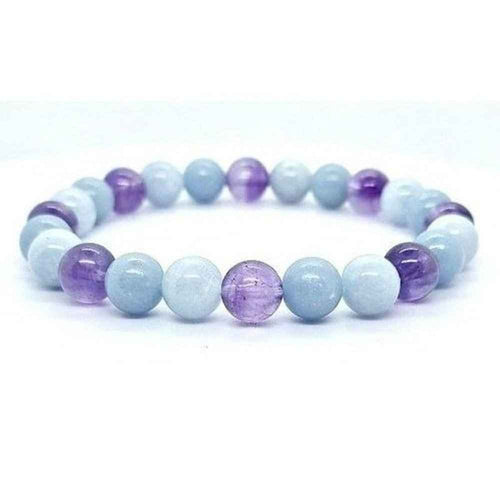
Aquamarine is the pale blue to blue-green member of the beryl family, the same mineral group as emerald. Its name comes from the Latin for sea water. It is hard and durable at 7.5 to 8 on the Mohs hardness scale, so it copes well with everyday wear and water, though its colour can fade in prolonged strong sunlight. Most commercial aquamarine is gently heat-treated to bring out a purer blue, which is standard and stable.
On this page
Few stones capture the colour of clear, shallow sea quite like aquamarine. Its soft blue has made it a jewellery favourite for centuries, and it is also the birthstone for March. There is a lot of flowery writing about aquamarine online, so this guide takes a plainer, factual approach: what the stone actually is, how it sits in the wider beryl family, how to tell it from look-alikes such as blue topaz and glass, the truth about its colour and treatment, and how to care for it.
What is aquamarine?
Aquamarine is a variety of the mineral beryl, a beryllium aluminium silicate. Pure beryl is colourless, and small amounts of iron are what give aquamarine its blue to blue-green colour. The name comes from the Latin aqua marina, meaning sea water, a nod to that clear, watery blue.
It is a hard, durable stone, sitting at 7.5 to 8 on the Mohs scale, which is harder than quartz and well suited to rings, pendants and everyday jewellery. Fine aquamarine is also valued for its clarity, often appearing clean and glassy with few visible inclusions.
Most aquamarine on the market today comes from Brazil, with important sources also in Madagascar, Nigeria, Mozambique, Zambia and Pakistan. As the birthstone for March, it is a popular choice for birthday and spring gifts.
Aquamarine and the beryl family
One of the most useful things to know about aquamarine is that it has famous relatives. Beryl is a single mineral that appears in several colours depending on trace elements, and each colour has its own gem name. Emerald is the green variety, morganite the pink to peach one, heliodor the yellow, and goshenite the colourless form.
This is why aquamarine and emerald, which look so different, are chemically the same mineral. It also explains aquamarine's good hardness and glassy clarity, qualities it shares across the beryl family. Knowing the family helps when you are comparing blue stones, since a true aquamarine behaves like beryl rather than like softer or denser look-alikes.
Aquamarine, blue topaz or glass?
Because several blue stones look alike, aquamarine is often confused with blue topaz and, at the cheaper end, with glass. A few practical checks help. Aquamarine tends to be a softer, more watery blue, sometimes with a hint of green, while much blue topaz is a brighter, almost electric blue produced by treatment. Under a loupe, blue topaz shows stronger doubling of its back facets than aquamarine does.
Against glass, the giveaways are simpler. Glass imitations often contain tiny round bubbles, feel slightly warmer to the touch, and lack the natural inclusions and gentle colour zoning of a real stone. Aquamarine also tends to feel cool and shows a subtle shift in depth of blue as you turn it in the light.
None of these tests is absolutely definitive on its own, so for a valuable piece a proper gemmological check is worth it. For the same practical approach on another stone, see our guide on how to tell if amethyst is real.
A note on colour and treatment
It is worth being honest about treatment, since many sellers gloss over it. A large share of aquamarine is gently heat-treated to remove yellow or green tones and settle the colour into a cleaner blue. This is a long-standing, widely accepted practice, and the resulting colour is stable under normal wear.
Natural, untreated stones with a strong blue do exist and are prized, but most affordable aquamarine you will see has been heated. There is nothing wrong with that as long as it is described accurately, which is the approach we take. What it does mean in practice is the next point: strong, prolonged sunlight is best avoided, as heat and intense light over time can lighten the colour of some stones.
How hard is aquamarine, and is it water-safe?
At 7.5 to 8 on the Mohs scale, aquamarine is one of the more hard-wearing coloured stones and tolerates water well. It can be cleaned with warm, soapy water and a soft cloth. A few sensible habits keep it at its best:
- Water is fine, soaking is unnecessary. Warm soapy water and a soft cloth clean it nicely; there is no need to leave it submerged for long periods.
- Keep it out of prolonged strong sunlight. Long, intense sun and heat can lighten aquamarine's colour over time, so avoid sunny windowsills and hot cars.
- Avoid harsh chemicals and ultrasonic cleaners. Strong dips can harm the surface, and ultrasonic or steam cleaning can be risky if a stone has inclusions.
- Store it separately. Even a hard stone can scratch others or be scratched by harder gems, so a lined box or pouch is ideal.
For a wider view of which stones tolerate water, see our water-safe crystals guide, and our note on stones that can fade in sunlight. To clean a finished piece safely, see cleaning crystal jewellery safely.
Choosing aquamarine jewellery
Aquamarine's hardness and clarity make it a practical and elegant choice, and a popular March birthstone gift. A few pointers help you buy well:
- Look at the blue in daylight. Decide whether you prefer a pure sea blue or a stone with a hint of green, as both are natural and down to taste.
- Ask about treatment. A trustworthy seller will tell you whether a stone is heat-treated, which is normal, or a rarer untreated natural colour.
- Check clarity and cut. Aquamarine often comes clean, so an even colour and a tidy cut that catches the light are good signs.
- It suits most jewellery. Thanks to its hardness it works well in rings as well as pendants and earrings.
If you are buying a bracelet, our crystal bracelet size guide helps you get the fit right first time.
Shop the collection
Genuine stones, clearly described and packed with care.
Aquamarine Crystals Crystal Jewellery Crystal Bracelets Crystal Necklaces Crystal GiftsFrequently asked questions
Is aquamarine a type of emerald?
They are the same mineral, beryl, but different varieties. Aquamarine is the blue to blue-green form and emerald is the green form; the colours come from different trace elements.
How can I tell aquamarine from blue topaz or glass?
Aquamarine is usually a softer sea blue, may show inclusions, and feels cool. Blue topaz is often a brighter electric blue with stronger facet doubling, while glass often has round bubbles and feels warmer. A gemmologist can confirm a valuable piece.
Is most aquamarine treated?
Yes. A large share is gently heat-treated to remove green or yellow tones and deepen the blue. This is standard, accepted and stable. Untreated natural-blue stones exist and are valued more highly.
Can aquamarine go in water?
Yes, briefly. At 7.5 to 8 on the Mohs scale it tolerates warm soapy water and a soft cloth. Avoid prolonged strong sunlight, which can lighten its colour, and skip harsh chemicals and ultrasonic cleaners.