Quick answer
Aventurine is a translucent variety of quartz known for its soft, glittering shimmer, an effect called aventurescence caused by tiny flakes of mineral inside the stone. Green is the most common colour (coloured by fuchsite mica), but it also occurs in blue, red, orange, peach, yellow and grey. Aventurine rates 7 on the Mohs hardness scale, so it is reasonably hard-wearing and well suited to everyday jewellery and tumbled stones.
On this page
If you have ever tilted a green stone in the light and watched it catch a faint, glittery sparkle, you have probably been looking at aventurine. It is one of the most recognisable members of the quartz family and a long-standing favourite for tumbled stones, beads and jewellery. This guide explains what aventurine actually is, the colours it comes in, where it is mined, how to care for it safely, and how to tell genuine aventurine apart from the man-made glass that is often sold under the same name.
What is aventurine?
Aventurine is a form of quartz, specifically a translucent quartzite made up mostly of interlocking quartz grains. What sets it apart from plain quartz is the scattering of small, platy mineral flakes spread through the stone. When light hits these flakes it reflects back as a gentle, shifting sparkle. Gemmologists call this optical effect aventurescence, and aventurine is the stone that gave the effect its name.
The flakes responsible are usually mica. In green aventurine the mineral is fuchsite, a chromium-rich green mica that gives the stone both its colour and its shimmer at the same time. Other varieties get their sparkle from flakes of hematite or goethite, which read as reddish, orange or golden brown.
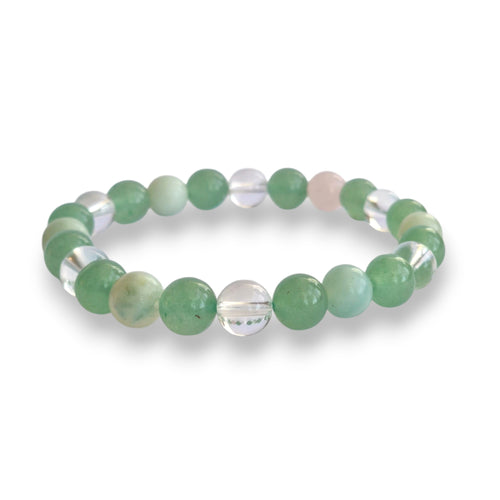
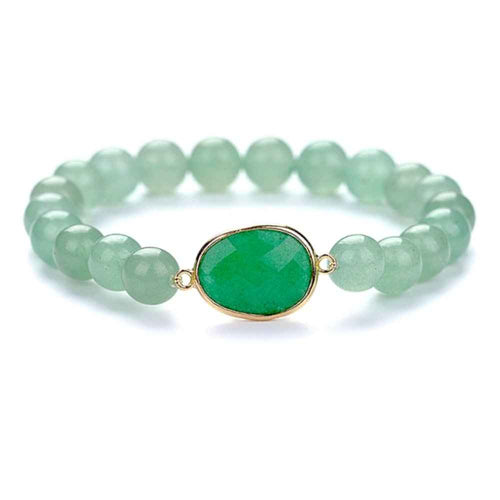
Because the colour and the glitter come from these natural inclusions rather than from a dye, good aventurine keeps its look for a very long time with sensible care. That durability and easy shimmer are a big part of why it has stayed such a popular choice for beads, bracelets and tumbled stones. The aventurine we stock is in our green aventurine collection.
Aventurine colours and what causes them
Most people picture aventurine as green, and green is by far the most common type on the market. But the stone appears in a useful range of colours, each tied to the mineral doing the sparkling:
- Green aventurine ranges from pale mint to deep forest green. The colour and shimmer both come from fuchsite mica.
- Blue aventurine gets its colour from inclusions such as dumortierite, often giving a denser, more even look.
- Red, orange and peach aventurine owe their warm tones and glint to flakes of hematite or goethite.
- Yellow and grey aventurine are less common and tend to show a softer sparkle.
Colour intensity varies a lot from piece to piece, which is part of the appeal. Two green aventurine beads from the same strand can differ noticeably in tone and shimmer, so it is worth looking at the actual item rather than assuming every stone is identical.
Where aventurine comes from
India is the best-known source of green aventurine and supplies much of what is sold worldwide, with significant material also coming from Brazil, Russia, Chile and Tanzania. The name itself has an interesting backstory: it comes from the Italian phrase a ventura, meaning "by chance". The phrase originally described a sparkling glass made in Venice, and the natural stone was later named after the glass because of their similar shimmer, not the other way round. That shared name is exactly why it pays to know the difference between the two, which we cover further down.
Is aventurine water-safe? How to care for it
As a quartz at hardness 7, aventurine is among the more durable popular stones and copes well with brief contact with water. A short rinse and a wipe with a soft cloth is usually all it needs. That said, a few sensible habits will keep it looking its best for years:
- Brief rinsing is fine, prolonged soaking is not. Leaving any porous tumbled stone in water for long periods is best avoided.
- Keep it away from harsh chemicals. Household cleaners, bleach and strong jewellery dips can dull the surface. Remove aventurine jewellery before cleaning or swimming.
- Limit long spells in strong sunlight. The green of fuchsite-coloured aventurine can soften over long-term, intense sun exposure, so a shaded shelf is kinder than a sunny windowsill.
- Store it separately. Harder stones and metal clasps can scratch a polished surface, so a soft pouch or a lined box helps.
For the full picture on which stones tolerate water and which do not, see our water-safe crystals guide, and our note on stones that can fade in sunlight. If you want to clean a finished piece, our guide on cleaning crystal jewellery safely walks through it step by step.
Natural aventurine vs aventurine glass (goldstone)
Because the man-made glass shares the aventurine name, the two are sometimes mixed up. "Aventurine glass", often sold as goldstone, is a manufactured material made by suspending tiny copper or copper-oxide flakes in molten glass. It is attractive in its own right, but it is glass, not a mineral, and should be described as such.
The quickest tell is the sparkle itself. Natural aventurine has a scattered, slightly uneven shimmer with real colour variation across the stone, while goldstone glass shows a very regular, glittery flash that looks almost too perfect. Glass also tends to be flawless and uniform in colour, may contain trapped air bubbles, and warms up faster in your hand than quartz does.
If a "green aventurine" piece is glassy, completely even and intensely sparkly, view the description with caution and ask the seller exactly what it is. For more on spotting genuine stones, our guide on how to tell if amethyst is real uses the same practical checks.
Choosing aventurine jewellery and tumbled stones
Aventurine's hardness makes it a practical choice for pieces you wear often. When you are choosing, a few things help you buy well:
- Look at the shimmer in good light. A gentle, shifting sparkle is a good sign of natural material.
- Expect some variation. Slight differences in tone between beads are normal and natural.
- Check the polish and drill holes. Clean, smooth holes and an even polish point to careful workmanship.
- Match the piece to the wearer. Bracelets take more knocks than pendants, so a hardness-7 stone like aventurine is a sensible everyday option.
If you are buying a bracelet, our crystal bracelet size guide helps you get the fit right first time.
Shop the collection
Genuine stones, carefully described and packed with care.
Crystal Bracelets Crystal Necklaces Tumbled Stones Crystal GiftsFrequently asked questions
Is aventurine a real crystal or a type of glass?
Natural aventurine is a genuine mineral, a variety of quartz. The confusion comes from a man-made glass called aventurine glass or goldstone, which copies the sparkle. They are different materials, so always check how a piece is described.
Can aventurine go in water?
A brief rinse is fine because aventurine is a hardness-7 quartz. Avoid prolonged soaking, harsh chemicals and long spells in strong sunlight to keep the colour and polish at their best.
What gives aventurine its sparkle?
Tiny flakes of mineral inside the stone reflect light, an effect called aventurescence. In green aventurine the flakes are fuchsite mica; warmer colours come from hematite or goethite.
How hard is aventurine and is it good for everyday jewellery?
It rates 7 on the Mohs scale, the same as other quartz, which makes it reasonably hard-wearing and a sensible choice for bracelets and pendants worn regularly.