Citrine is the warm, golden member of the quartz family, and one of the most popular yellow stones in jewellery. If you are shopping for it, the two things worth knowing are how to tell natural citrine from heat treated citrine, and how to look after it so it keeps its colour. This guide covers both, plus the basic facts, in plain language.
On this page
- What is citrine?
- Natural citrine vs heated citrine
- Is citrine safe in water?
- How to care for citrine
- Citrine in jewellery
- How to choose citrine
- Citrine FAQ
Citrine at a glance
Quick answer: citrine is a yellow to amber variety of quartz (Mohs 7), so it is durable enough for everyday jewellery and usually fine for a brief rinse in cool water. Most citrine on the market is heat treated amethyst, which is still genuine quartz. Keep citrine out of prolonged direct sunlight, as strong light can fade the colour over time.
Citrine at a glance
- Mineral: Quartz (silicon dioxide, SiO2)
- Colour: Pale yellow to deep amber
- Hardness: Mohs 7, good for daily wear
- In water: A brief rinse only, then dry
- Keep from: Prolonged direct sunlight
What is citrine?
Citrine is a variety of quartz (silicon dioxide) coloured in shades from pale lemon to deep amber. In natural citrine the colour comes from traces of iron within the crystal. It sits at 7 on the Mohs hardness scale, the same as amethyst and clear quartz, which makes it a practical choice for rings, bracelets and necklaces worn every day.
Naturally yellow citrine is relatively uncommon. Because of that, most of the citrine sold worldwide is produced by gently heating amethyst or smoky quartz, which shifts the colour towards yellow and orange. This is a long established practice, the result is permanent, and the stone is still genuine quartz. The honest distinction is not real versus fake, but natural colour versus heat treated colour.
Natural citrine vs heated citrine
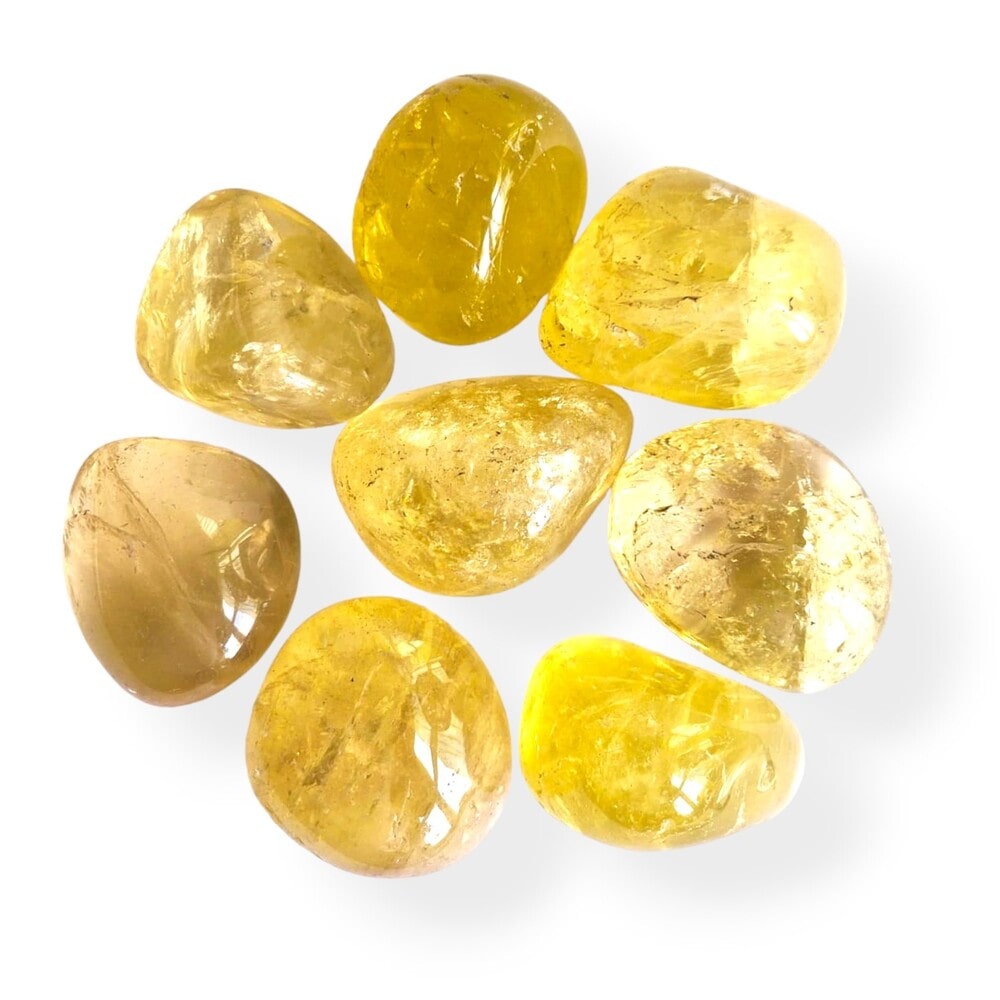
You cannot always tell with certainty by eye, but a few clues help. Natural citrine tends to be a soft, even lemon yellow, sometimes with a faint smoky tint. Heat treated citrine is often a stronger orange to amber, and clusters or geodes in a vivid burnt orange with a whitish base are almost always heated. Price is another hint, since natural citrine is rarer and usually costs more.
Natural citrine vs heated citrine
Natural citrine
- Pale, soft lemon yellow
- Even colour, sometimes a smoky tint
- Rarer in nature, usually pricier
Heated citrine (from amethyst)
- Deeper orange to amber
- Often a whitish, cloudy base
- Very bright clusters are usually heated
Both are genuine quartz. Heat treatment is permanent and stable. We state any treatment in the product description.
If natural colour matters to you, the simplest step is to ask the seller. At Crystals Healing UK we state in the product description when a stone has been treated. For more on spotting treatments and imitations across stones, see our companion guide on amethyst, the stone citrine is most often heated from.
Is citrine safe in water?
As a quartz at Mohs 7, citrine is generally fine for a brief rinse in cool, clean water, dried straight away with a soft cloth. Avoid soaking it, and keep it away from salt water, hot water and household cleaners, which can dull the surface over time or affect any setting. If a piece is cracked, glued or set in jewellery, treat it as keep dry and use a soft cloth instead. For the full picture, read our water safe crystals guide.
Popular citrine pieces
A small selection of customer favourites. Swipe to see more.


How to care for citrine
Citrine is easy to live with. Wipe it with a soft, dry cloth to remove dust and skin oils. Store it separately from harder or softer stones so nothing scratches. The one thing to watch is light: prolonged, strong sunlight can slowly fade citrine, so display or store it away from a sunny windowsill. If you wear citrine jewellery, put it on after applying perfume, lotion or hairspray, and take it off before showering, swimming or heavy exercise. Our step by step routine is in how to clean crystals.
Citrine in jewellery
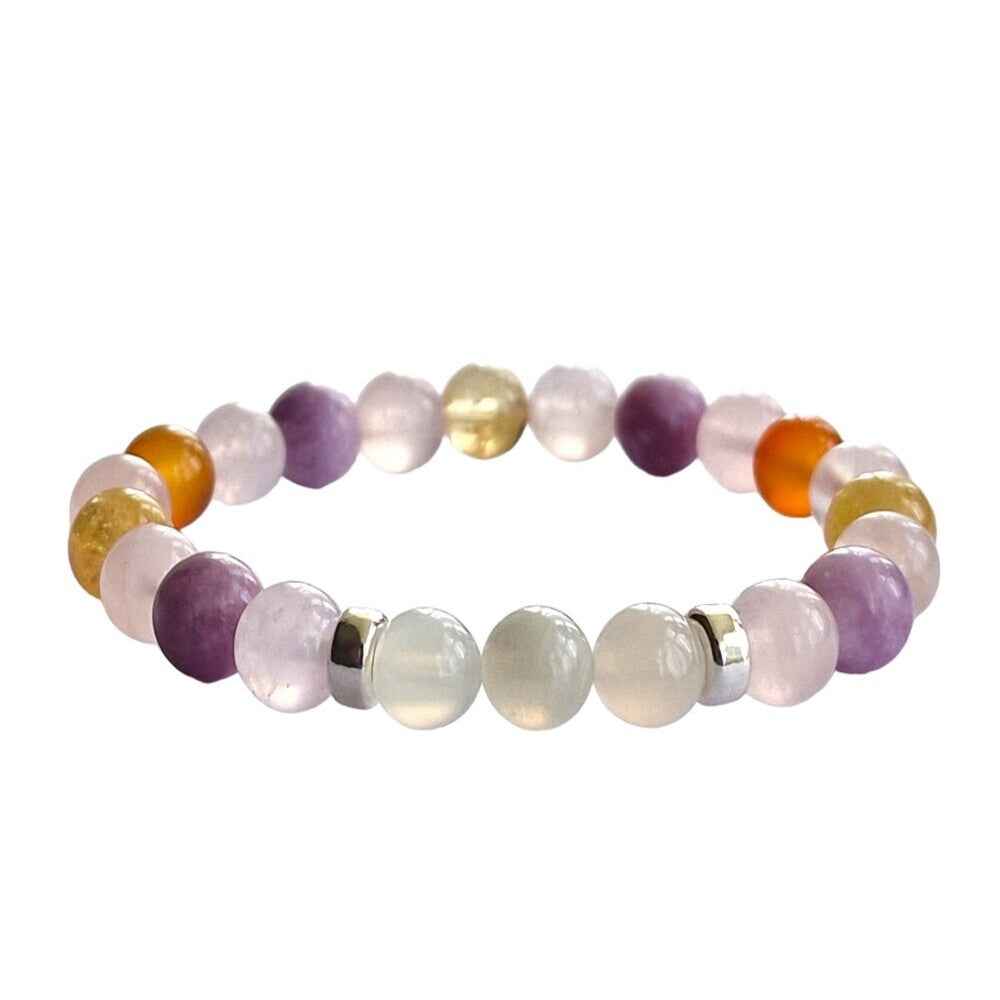
Its warm colour and good hardness make citrine a versatile choice. You will see it as faceted stones in pendants, as 6 mm and 8 mm round beads in stretch bracelets, as tumbled stones for collecting and display, and as raw points in necklaces. It pairs well with both silver and gold tones.
Shop citrine at Crystals Healing UK
Browse the citrine range. Free UK delivery over £30.
Citrine collection Citrine bracelets Tumbled stones Raw citrine necklace
How to choose citrine
Start with the colour you like, from soft lemon to rich amber. If you want a stone for daily wear, citrine at Mohs 7 is a sensible, hard wearing pick. For a gift, a tumbled stone or a bracelet needs no sizing and presents well. And if natural colour is important to you, check whether the listing states the stone is heat treated, which is normal and nothing to worry about, but good to know before you buy.
Citrine FAQ
Is heated citrine real citrine?
Yes. Heated citrine is genuine quartz whose colour has been brought out by gentle heat, usually from amethyst. It is not glass or an imitation. The honest distinction is natural colour versus heat treated colour, not real versus fake.
Can citrine go in water?
A brief rinse in cool water is usually fine, then dry it at once. Avoid soaking, salt water and hot water. Keep cracked, glued or set pieces dry and use a soft cloth.
Does citrine fade in sunlight?
It can. Prolonged, strong sunlight may slowly lighten citrine, so keep it out of direct sun when storing or displaying it.
What is the difference between citrine and amethyst?
Both are quartz. Amethyst is purple, coloured by iron and natural irradiation, while citrine is yellow to amber. Heating amethyst is the most common way citrine colour is produced.
How hard is citrine?
Citrine is 7 on the Mohs scale, the same as other quartz varieties, which makes it suitable for everyday jewellery.
Related reading
- Water safe crystals: what can go in water
- How to clean crystals
- Amethyst guide
- Ametrine: amethyst and citrine in one stone
Our products are sold as decorative jewellery, gifts and home accessories. We make no medical, therapeutic, spiritual or supernatural claims about them. If you have a health concern, please consult a qualified medical professional.