Quick answer
Fluorite is calcium fluoride, often called the most colourful mineral in the world, appearing in purple, green, blue, yellow and banded "rainbow" forms. It is the stone that gave us the word fluorescence, as many pieces glow under ultraviolet light. It is soft at 4 on the Mohs hardness scale and has perfect cleavage, so it is beautiful but delicate, and best kept away from knocks, soaking and prolonged sunlight.
On this page
Fluorite is one of the most eye-catching stones you can own, famous for a colour range no other common mineral can match, from deep purple to glassy green and gentle banded rainbows. It is also the stone behind the word fluorescence, and it has a proud English connection in the form of Blue John. This guide explains what fluorite is, the colours and varieties you will meet, why it needs gentle handling, and how to choose and care for it.
What is fluorite?
Fluorite is calcium fluoride, a mineral so varied in colour that it is often called the most colourful in the world. Pure fluorite is actually colourless, and its many shades come from tiny impurities and natural colour centres within the crystal. The result is everything from clear and pale to vivid purple, green, blue, yellow and pink, often in the same piece.
It is also a small piece of science history. Fluorite glows under ultraviolet light, and this property was named fluorescence after the stone itself. The glow is most often blue, but green, purple and other colours occur depending on the specimen.
The catch is durability. Fluorite is soft, sitting at just 4 on the Mohs scale, and it has perfect cleavage in four directions, meaning it can split cleanly along internal planes. It is the only common mineral with this particular cleavage, which is wonderful for forming neat octahedron shapes but does mean the stone needs careful handling.
Fluorite's colours and Blue John
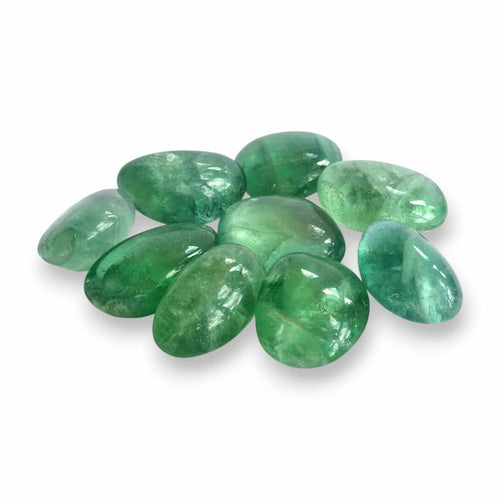
Fluorite's colours come in solid tones and in beautiful bands. Purple and green are the most familiar, with blue, yellow, pink and colourless also common. "Rainbow fluorite" is the popular name for pieces that show several colours layered together in natural zones, and the banding is genuine rather than dyed in good material.
For British readers there is a special variety worth knowing: Blue John, a banded purple, violet and golden-yellow fluorite found almost only around Castleton in Derbyshire. It has been prized since Roman times and carved into bowls, vases and ornaments, making it one of England's most famous decorative stones. It is the same mineral as other fluorite, simply a rare and historic banded form.
Because the colour comes from delicate colour centres, strong sunlight can fade fluorite over time, especially purple and green, which leads neatly to how it should be cared for.
Is fluorite delicate? Hardness, cleavage and water
Yes, fluorite is one of the more delicate popular stones, and it rewards gentle handling. At hardness 4 it scratches easily, and its perfect cleavage means a knock can split it along a clean plane. Water is also best limited, because it can work into those cleavage planes. A few habits protect it:
- Keep it out of water beyond a quick wipe. Avoid soaking, and never leave fluorite in water; salt water and chlorinated pool water are especially harsh.
- Protect it from knocks. Because it cleaves so readily, avoid drops and hard contact, and handle rings and bracelets with extra care.
- Limit strong sunlight. Prolonged direct sun can fade the colour over time, so keep fluorite off sunny windowsills.
- Avoid heat and chemicals. Sudden temperature change can fracture it, and household cleaners can dull or damage the surface.
For a wider view of which stones tolerate water, see our water-safe crystals guide, and to keep colour and finish safe, our guide on how to store crystals and prevent fading. To compare it with tougher stones, see the most durable gemstones for everyday wear.
Choosing fluorite jewellery and pieces
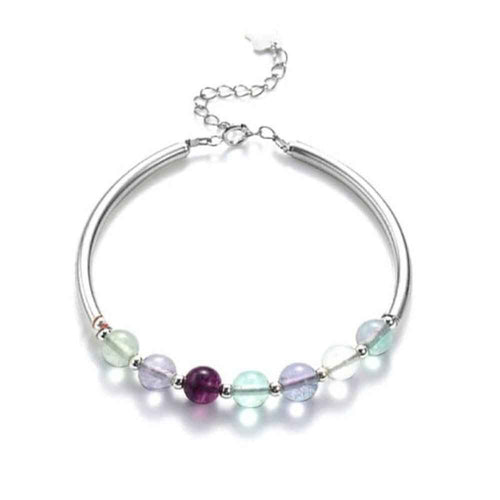
Fluorite is irresistible for its colour, and it makes wonderful pendants, beads and display pieces. Because it is soft, a little thought helps you enjoy it for longer:
- Favour pendants and display pieces. These take fewer knocks than rings or everyday bracelets, which suits a softer stone.
- Look for genuine banding. In real rainbow fluorite the colour zones are clear and defined, and the stone feels reasonably heavy for its size.
- Check for chips. Because of its cleavage, inspect edges and drill holes for clean, undamaged surfaces.
- Ask about Blue John. Genuine Blue John is rare and English; if a piece is described that way, a reputable seller will be clear about it.
If you are buying a bracelet, our crystal bracelet size guide helps you get the fit right first time.
Shop the collection
Genuine stones, clearly described and packed with care.
Crystal Jewellery Crystal Necklaces Crystal Gifts Tumbled StonesFrequently asked questions
Why is fluorite so colourful?
Pure fluorite is colourless, and its wide range of colours comes from tiny impurities and natural colour centres in the crystal. This is why a single piece can show purple, green, blue and yellow zones together.
Can fluorite go in water?
Keep it out of water beyond a quick wipe. At hardness 4 with perfect cleavage, fluorite can be damaged by soaking, and salt or chlorinated water is especially harsh. Avoid sudden heat too.
Does fluorite fade in sunlight?
It can. Prolonged direct sunlight gradually fades fluorite's colour, especially purple and green, so it is best kept out of bright windows and stored away from strong light.
What is Blue John?
Blue John is a rare banded purple, violet and yellow variety of fluorite found almost only near Castleton in Derbyshire, England. It has been carved into ornaments since Roman times and is the same mineral as other fluorite.