Quick answer
Howlite is a naturally white mineral with grey to black web-like veining, soft at about 3.5 on the Mohs hardness scale. Because it is white and porous, it takes dye very easily, which is why dyed howlite is the most common imitation of turquoise on the market. Natural howlite is a lovely marbled stone in its own right, but dyed pieces should always be described honestly.
On this page
Howlite is one of those stones that is interesting for two opposite reasons. In its natural form it is a soft white stone with handsome grey veining, a little like marble. But it is also the material most often dyed blue and sold as fake turquoise, which makes it one of the most useful stones to understand if you want to shop wisely. This guide covers what howlite really is, how it is used to imitate turquoise, simple checks you can do yourself, and how to care for it.
What is howlite?
Howlite at a glance
- Mineral: Calcium borosilicate
- Natural colour: White, grey veining
- Mohs hardness: About 3.5 (soft)
- Texture: Porous, takes dye
- Often dyed as: Imitation turquoise
- Named after: Henry How (Canada)
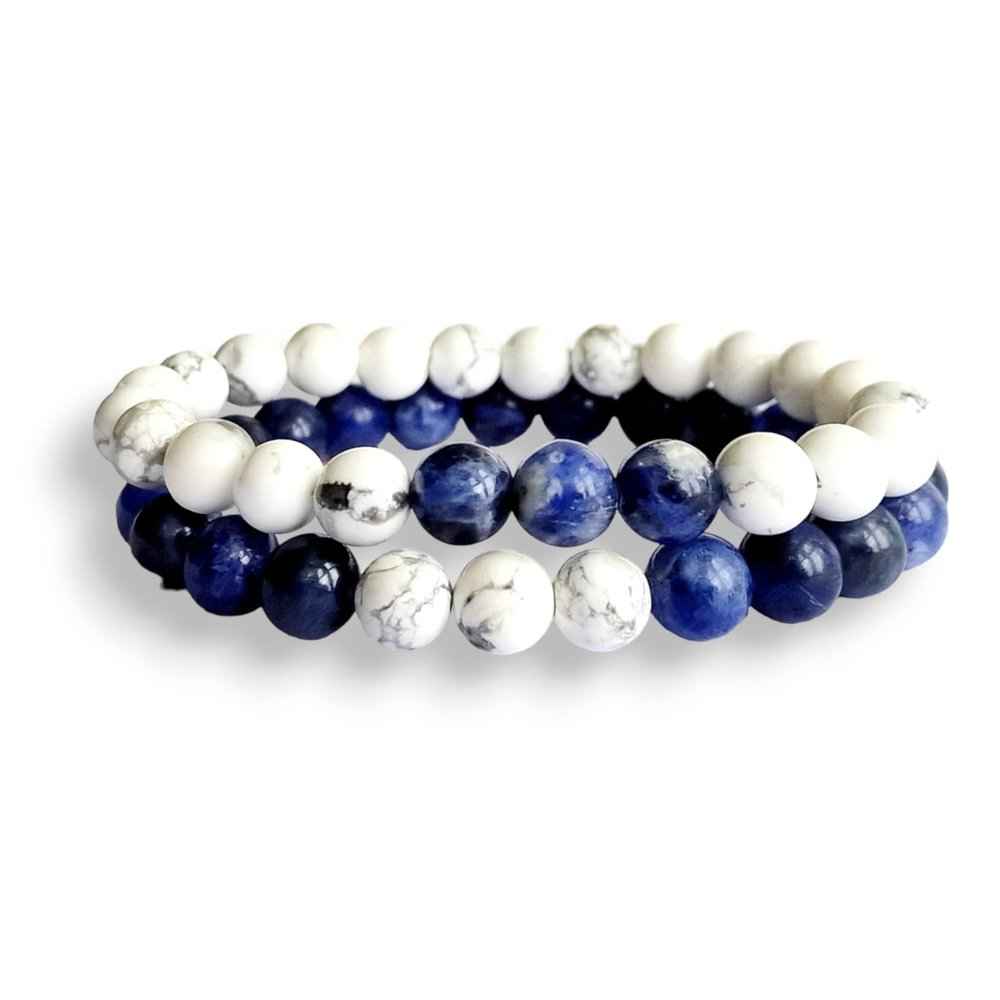
Howlite is a calcium borosilicate mineral, usually found as white nodules with a network of grey to black veins running through them. That marbled look is its signature in natural form. It was first described in the nineteenth century by the Canadian chemist and geologist Henry How, which is where the name comes from, and Canada and the United States remain important sources.
It is worth being clear about colour, because this is where most confusion starts. Naturally, howlite comes in only one colour range: white to colourless or pale grey, marked with grey to black veining. It does not occur naturally in blue, green, red or any other bright shade. So any vividly coloured howlite you see, whether blue "turquoise", red "coral" or purple, has been dyed, every single time.
The key practical fact about howlite is that it is soft and porous. At around 3.5 on the Mohs scale it scratches very easily, far more so than quartz, and its porous surface readily soaks up liquids, including dye. That single property explains almost everything about how it is used and how it should be cared for.
In its natural white-and-grey state, howlite is an attractive, affordable stone for beads and tumbled pieces. The complications begin when it is coloured to look like something more expensive.
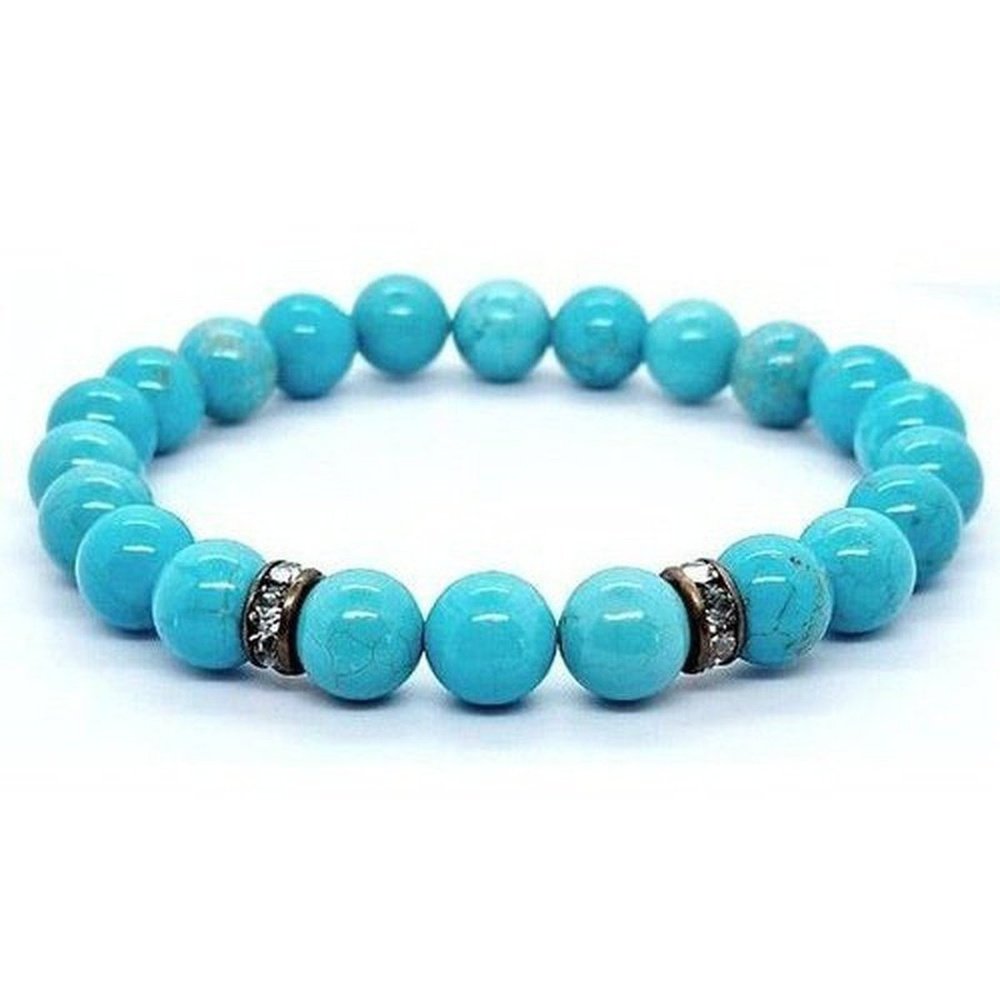
Howlite, dyed "turquoise" and magnesite
Dyed howlite vs turquoise
| Dyed howlite | Real turquoise |
|---|---|
| Very even, bright blue | More muted, varied blue |
| Dye pools in the veins | Natural matrix veining |
| White shows at chips | Colour goes right through |
| Soft, about 3.5 | Harder, 5 to 6 |
| Acetone lifts the dye | Acetone does nothing |
Because howlite is white and porous, it dyes beautifully, and dyed blue howlite is the classic stand-in for turquoise. You will also see it under names like "white turquoise", "turquenite" or simply "howlite turquoise". A very similar story applies to magnesite, another soft white mineral that is dyed the same way, and which has also been sold as "buffalo turquoise".
None of this is a problem when it is labelled clearly, and dyed howlite is a perfectly nice, affordable blue stone. The issue is only when it is sold as genuine turquoise at genuine-turquoise prices. Real turquoise is a harder copper-bearing mineral (5 to 6 on the Mohs scale) with a more muted, varied colour, while dyed howlite tends to be an even, bright blue with the dye gathering darker in the veins.
For the same honest approach to other stones, see our guide on how to tell if amethyst is real.
Simple checks you can do
You cannot prove everything at home, but a few practical checks quickly flag dyed howlite or magnesite sold as turquoise:
- Look at the veins. If the blue is very uniform and the dark colour pools along the veins and cracks, that points to dye rather than natural turquoise.
- Check chips and drill holes. A white core showing at a chip or beside a bead hole is a strong sign of a white stone dyed on the surface.
- Consider the price. A large, flawless, vivid blue "turquoise" at a low price is far more likely to be dyed howlite.
- The acetone test. A cotton bud lightly dipped in acetone will often lift colour from dyed howlite, leaving a pale mark; genuine turquoise is unaffected. Test discreetly and only on your own piece.
If in doubt about a valuable piece, a jeweller or gemmologist can confirm it. Honest sellers will simply tell you whether a stone is natural howlite, dyed howlite or genuine turquoise.
How to care for howlite
Howlite needs gentler handling than a hard stone like quartz, because it is soft and porous, and because any dye can be affected by water, light and chemicals. A few habits keep it looking good:
- Keep it out of water. A quick wipe with a soft, barely damp cloth is best; do not soak it, as the porous stone absorbs water and soaking can loosen dye in coloured pieces.
- Avoid chemicals and cosmetics. Perfume, hairspray, cleaning products and acetone can damage the surface and lift dye, so put jewellery on after these.
- Limit strong sunlight. Natural howlite is stable, but dyed howlite can fade in prolonged sun, so keep coloured pieces out of bright windows.
- Store it carefully. Being soft, it scratches easily, so keep it in its own pouch or a lined box away from harder stones.
For a wider view of which stones tolerate water, see our water-safe crystals guide, and our note on stones that can fade in sunlight. To clean a finished piece safely, see cleaning crystal jewellery safely.
Choosing howlite jewellery
Howlite is affordable and easy to wear, whether you like the natural white marble look or a dyed colour. The main thing is to know which you are buying:
- Enjoy natural white howlite. The grey veining on a soft white background is attractive in its own right and needs no colour at all.
- Buy dyed howlite as dyed howlite. If you want the blue look, that is fine, just make sure it is sold honestly and priced as howlite, not turquoise.
- Mind the softness. As a hardness-3.5 stone it suits pendants, earrings and beads better than rings that take daily knocks.
- Check the finish. An even polish and clean drill holes point to careful workmanship.
If you are buying a bracelet, our crystal bracelet size guide helps you get the fit right first time.
Shop the collection
Genuine stones, clearly described and packed with care.
Howlite Crystals Crystal Bracelets Crystal Necklaces Crystal Jewellery Tumbled StonesFrequently asked questions
What colours does natural howlite come in?
Only white to pale grey, with grey to black veining. Howlite does not occur naturally in blue, green or red, so any brightly coloured howlite has been dyed.
Is howlite the same as turquoise?
No. Howlite is a soft white mineral that is often dyed blue to imitate turquoise. Real turquoise is a different, harder copper-bearing mineral. Dyed howlite is fine when sold honestly, but it is not turquoise.
How can I tell dyed howlite from turquoise?
Look for a very even bright blue with dye pooling in the veins, white showing at chips or drill holes, a soft surface that scratches easily, and a low price. Acetone will often lift dye from howlite but not from turquoise.
Can howlite go in water?
Keep it out of water beyond a quick wipe. Howlite is soft and porous, so soaking can damage the surface and loosen dye in coloured pieces. Avoid chemicals, perfume and prolonged sunlight too.