Quick answer
Obsidian is a natural volcanic glass that forms when lava cools so quickly that crystals have no time to grow. It is usually a deep, glossy black, with varieties such as snowflake, mahogany and sheen obsidian showing extra patterns. Because it is glass rather than a crystalline mineral, it rates a softer 5 to 5.5 on the Mohs hardness scale, breaks with very sharp edges, and is best handled as a more delicate stone.
On this page
Few stones look quite as striking as a piece of polished obsidian, with its mirror-like black surface and glassy shine. Yet obsidian is unusual among the stones on our shelves: it is not a crystal at all in the strict sense, but a natural glass born from a volcano. This guide covers what obsidian actually is, the patterned varieties you will come across, how to handle and clean it given its softer nature, and how to tell genuine obsidian from ordinary manufactured glass.
What is obsidian?
Obsidian is a naturally occurring volcanic glass. It forms when silica-rich (felsic) lava is extruded and then cools extremely rapidly, leaving almost no time for the orderly crystal structure that defines a true mineral. Because of this, geologists class obsidian as a mineraloid rather than a mineral. In simple terms, it has the chemistry of rock but the internal structure of glass, which is exactly what gives a polished piece that deep, liquid shine.
Most obsidian is made up of more than seventy per cent silica, and small amounts of iron and magnesium give it that characteristic deep black colour. One of its defining features is the way it breaks: obsidian has a conchoidal fracture, splitting into smooth, curved surfaces with edges that can be extremely sharp. That same property is why people shaped it into cutting tools and blades for thousands of years, and it is worth keeping in mind when handling broken or chipped pieces.
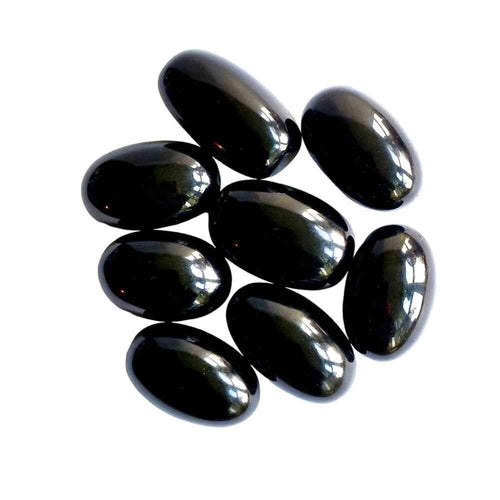
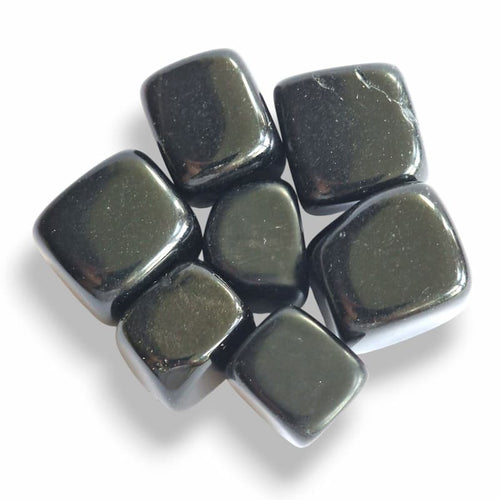
Today, that combination of rich colour and glassy lustre is what makes polished obsidian so popular for spheres, palm stones, pendants and decorative carvings. The varieties shown here all begin as the same volcanic glass, but tiny inclusions and trapped bubbles give each one its own character. The obsidian we stock is in our black obsidian collection.
Types of obsidian and their patterns
Plain black obsidian is the most familiar, but those inclusions and gas bubbles create several attractive varieties:
- Snowflake obsidian carries small grey-white clusters of a mineral called cristobalite, which look like scattered snowflakes against the black.
- Mahogany obsidian shows rich red-brown bands and patches caused by iron staining within the glass.
- Sheen obsidian (gold or silver sheen) reveals a soft metallic glow when tilted, produced by tiny gas bubbles aligned in layers.
- Rainbow obsidian displays bands of iridescent colour from microscopic mineral inclusions, most visible under direct light.
Each variety is still fundamentally the same volcanic glass, so they share the same hardness and handling needs covered below.
How hard is obsidian, and is it water-safe?
Obsidian sits at about 5 to 5.5 on the Mohs scale, which makes it noticeably softer than quartz-family stones. As a glass it is also brittle, so the main risks are scratches, chips and knocks rather than water. A short rinse is fine because the surface is non-porous, but a few habits protect it:
- Water is fine briefly, soaking is unnecessary. Wipe with a soft, damp cloth and dry it; the glassy surface does not absorb water.
- Guard against knocks and drops. A hard impact can chip or fracture obsidian, and the broken edges are very sharp.
- Store it on its own. Harder stones will scratch the polish, so a lined box or soft pouch keeps the shine intact.
- Avoid sudden temperature changes. Like any glass, obsidian can crack under thermal shock, so keep it away from very hot water or radiators.
For a wider view of which stones tolerate water, see our water-safe crystals guide. To clean a finished piece without harming the setting, our guide on cleaning crystal jewellery safely takes you through it.
Natural obsidian vs manufactured glass
Because obsidian is itself a glass, it is one of the trickier stones to verify, and ordinary black glass is sometimes sold in its place. The differences are subtle but real. The most useful checks are the small imperfections: natural obsidian often holds faint inclusions, irregular bubbles or subtle swirls, while manufactured glass tends to be flawless and may show a faint mould seam or rows of identical, perfectly round bubbles.
Genuine sheen and rainbow patterns are also very difficult to imitate, so a piece with a soft, shifting glow is usually a good sign. If a "black obsidian" bead is glass-clear, completely uniform and unusually cheap, it is worth asking the seller exactly what the material is.
For more on spotting genuine stones, our guide on how to tell if amethyst is real uses the same practical approach.
Choosing obsidian jewellery and pieces
Obsidian's deep shine makes it a favourite for pendants, polished spheres and carvings. Because it is softer and more brittle than quartz, a little thought helps you choose well:
- Favour pendants and earrings over bracelets. Pieces that hang are less exposed to knocks than a wrist-worn bracelet.
- Check the polish closely. A clean, even, mirror-like surface with no dull patches points to good finishing.
- Inspect edges and drill holes. Look for smooth, chip-free edges, as obsidian can flake if worked carelessly.
- Enjoy the variety. If you like a little pattern, snowflake, mahogany or sheen pieces add character while behaving the same way in wear.
If you are buying a bracelet anyway, our crystal bracelet size guide helps you get the fit right first time.
Shop the collection
Genuine stones, carefully described and packed with care.
Crystal Necklaces Crystal Jewellery Tumbled Stones Crystal GiftsBlack obsidian, in stock now
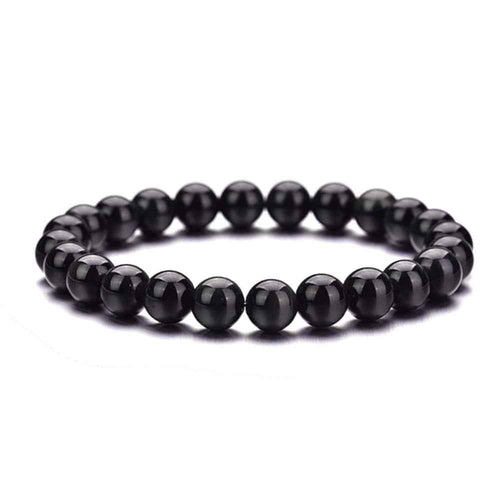
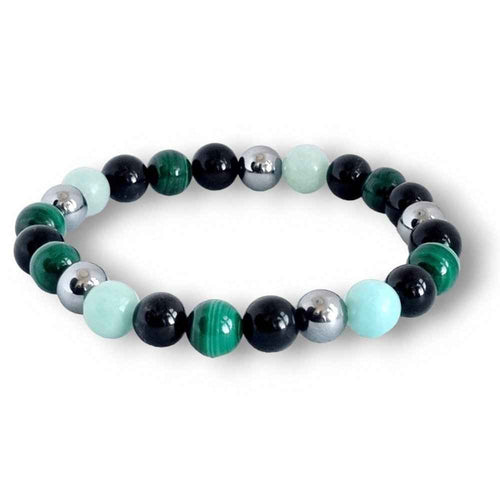
Polished tumblestones, bracelets and a pendant, all genuine volcanic glass. Hand-selected and packaged in the UK.


Frequently asked questions
Is obsidian a crystal or a glass?
Obsidian is a natural volcanic glass, classed by geologists as a mineraloid rather than a true crystalline mineral. It has the chemistry of rock but the glassy internal structure of glass.
What colour is obsidian?
Most obsidian is a deep, glossy black, coloured by small amounts of iron and magnesium. Iron staining produces the red-brown bands of mahogany obsidian, cristobalite inclusions give snowflake obsidian its grey-white flecks, and aligned gas bubbles create the gold or silver glow of sheen obsidian and the colour bands of rainbow obsidian.
How can I tell if obsidian is real?
Look for small natural imperfections. Real obsidian usually holds faint inclusions, irregular bubbles or subtle swirls, while manufactured glass tends to be flawless and may show a mould seam or rows of identical, perfectly round bubbles. Genuine sheen and rainbow effects are very hard to imitate. A piece that is glass-clear, completely uniform and unusually cheap is worth questioning.
How hard is obsidian on the Mohs scale?
Obsidian rates about 5 to 5.5 on the Mohs scale, softer than quartz-family stones at 7. It is also brittle, so it scratches and chips more easily than a tumbled quartz of the same size.
Can obsidian go in water?
A brief rinse is fine because the surface is non-porous. Avoid long soaking, sudden temperature changes and knocks, since obsidian is softer (5 to 5.5 Mohs) and can chip or crack.
Why does obsidian have such sharp edges?
It breaks with a conchoidal (curved) fracture that produces very thin, sharp edges. This is why it was historically shaped into blades, and why chipped pieces should be handled carefully.
Is obsidian good for everyday jewellery?
It is better suited to pendants and earrings than to bracelets, because its softer, brittle nature means a wrist piece is more likely to be knocked and scratched.