Quick answer
Sodalite is a rich royal-blue mineral, usually marked with white veins, that belongs to the feldspathoid family. It rates 5.5 to 6 on the Mohs hardness scale, so it is softer than quartz and needs gentler care. It is often confused with lapis lazuli, but the easiest tell is that sodalite normally lacks the golden flecks of pyrite that lapis has. A rare variety called hackmanite can even change colour in sunlight.
On this page
Deep blue stones have always been prized, and sodalite is one of the most affordable and recognisable of them. With its royal-blue body and soft white veining, it brings a calm, classic colour to beads, tumbled stones and carvings. It is also one of the stones most often mixed up with lapis lazuli, so this guide explains what sodalite actually is, how to tell it apart from lapis, the curious variety that changes colour, and how to care for it given its softer nature.
What is sodalite?
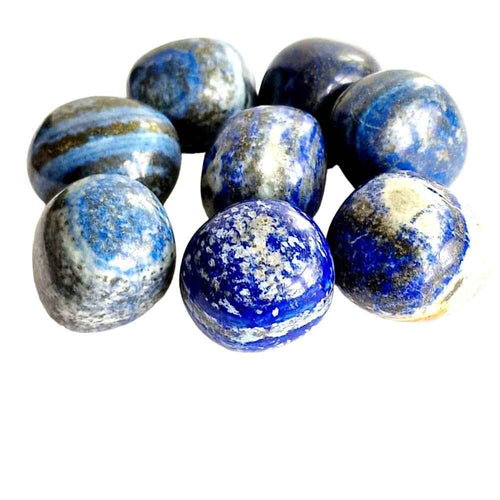
Sodalite is a sodium-rich aluminium silicate, and it gives its name to the wider sodalite group of minerals. It belongs to a family called the feldspathoids, which are close relatives of the feldspars. Its colour ranges from soft to deep royal blue, almost always broken up by streaks and patches of white, which is usually calcite sitting within the stone.
At 5.5 to 6 on the Mohs scale, sodalite is a medium-hard stone, noticeably softer than the quartz family. It takes a good polish but is more easily scratched, and the white veins are softer still, so they can wear or dull faster than the blue. Its streak, the colour of its powder, is white to very pale blue.
Most sodalite on the market comes from Brazil, with notable deposits in Canada, Namibia, Greenland and Russia. Wherever it is from, its rich, even blue and easy availability have made it a long-standing favourite for beads, pendants and decorative pieces.
Sodalite vs lapis lazuli: how to tell them apart
Sodalite and lapis lazuli look similar at a glance, and the two are regularly confused or even sold in place of one another. The quickest way to separate them is to look for gold. Lapis lazuli almost always contains small, glinting flecks of pyrite (often called fool's gold), while sodalite very rarely does.
There is also a difference in what they are. Lapis lazuli is a rock made of several minerals, mainly lazurite (itself a member of the sodalite group) along with calcite and pyrite. Sodalite is a single mineral. Sodalite tends to be a slightly softer, more even royal blue with white calcite veins, whereas lapis is usually a deeper ultramarine and often carries a higher price.
If a blue stone is sold as lapis but shows white veining and no gold flecks at all, it is worth asking whether it is in fact sodalite. For the same kind of practical checks on other stones, see our guide on how to tell if amethyst is real.
Hackmanite: the sodalite that changes colour
One of the most interesting members of the sodalite group is hackmanite, a variety known for a genuine optical curiosity called tenebrescence. Freshly exposed or kept in the dark, some hackmanite shows a pink to violet tint, which fades in daylight and then returns after time in the dark or under ultraviolet light. The effect is reversible and is caused by the way the crystal structure responds to light.
Not all sodalite does this, and the strength of the effect varies by source, with material from Greenland, Afghanistan and Canada being well known for it. It is purely a physical, light-driven property of the mineral, and a nice example of how varied a single mineral group can be.
How hard is sodalite, and is it water-safe?
At 5.5 to 6 on the Mohs scale, sodalite is a softer stone, and its white calcite veins are softer again, so it pays to be gentle. Brief contact with water is fine, but it is not a stone to soak. A few habits keep it looking its best:
- Keep water brief. A quick wipe with a soft, barely damp cloth is plenty; avoid long soaking, which can dull the softer veins.
- Avoid acids and harsh chemicals. Calcite veining reacts to acids, and cleaners or strong dips can etch or dull the surface.
- Take care in strong sunlight. Colour-change varieties react to light, so a shaded shelf is a safer home for any sodalite you want to keep vivid.
- Store it separately. Harder stones will scratch a softer one, so a soft pouch or lined box protects the polish.
For a wider view of which stones tolerate water, see our water-safe crystals guide. To freshen up a finished piece safely, our guide on cleaning crystal jewellery safely takes you through it.
Choosing sodalite jewellery and tumbled stones
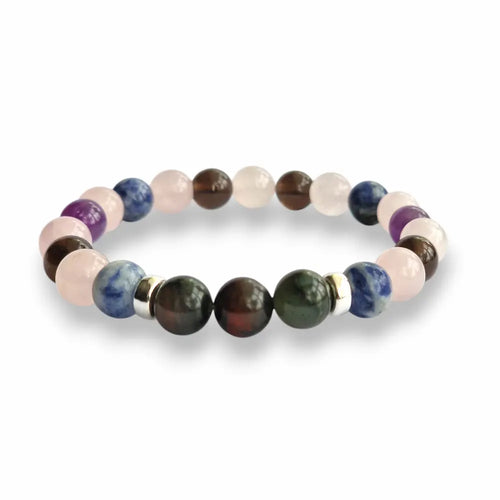
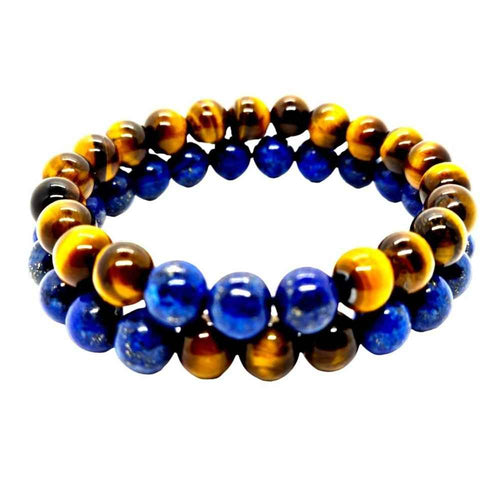
Sodalite's deep blue makes it an easy colour to wear and an affordable alternative to pricier blue stones. A few checks help you choose well:
- Enjoy the veining. Soft white patterns running through the blue are natural and part of the character, not a flaw.
- Check it is sodalite, not lapis. If a piece is sold as lapis but has no gold pyrite flecks, ask the seller to confirm the material.
- Mind the softness. As a hardness-5.5 to 6 stone, sodalite suits pendants, earrings and beads better than rings that take daily knocks.
- Look at the polish. An even, smooth finish with tidy drill holes points to careful workmanship.
If you are buying a bracelet, our crystal bracelet size guide helps you get the fit right first time.
Shop the collection
Genuine stones, clearly described and packed with care.
Sodalite Crystals Crystal Bracelets Crystal Necklaces Tumbled StonesFrequently asked questions
Is sodalite the same as lapis lazuli?
No. They look similar, but lapis lazuli is a rock containing gold pyrite flecks, while sodalite is a single mineral that usually has white veins and no pyrite. The gold flecks are the quickest way to tell them apart.
Can sodalite go in water?
Keep water brief. Sodalite is fairly soft and its white calcite veins react to acids and dislike soaking, so wipe it with a soft cloth and avoid long water contact, salt water and chemicals.
Why does some sodalite change colour?
A variety called hackmanite shows tenebrescence, a reversible colour change driven by light. It can shift between a pink or violet tint and a paler shade depending on exposure to daylight or ultraviolet light.
Is sodalite good for everyday jewellery?
It is best for pendants, earrings and beads rather than rings, because at 5.5 to 6 on the Mohs scale it is softer and more prone to scratches and knocks than harder stones.